
According to the 2023 report, EU trade in textiles and clothing crossed the EUR200bn (US$215bn) mark for the first time in history, in 2022.
This record growth in total trade is mainly due to a sharp increase in clothing imports (+36,6% in value), especially from China and Bangladesh, which outweighs a positive export performance.
Go deeper with GlobalData


Discover B2B Marketing That Performs
Combine business intelligence and editorial excellence to reach engaged professionals across 36 leading media platforms.
However, as a result, the EU’s trade deficit in textiles and clothing has increased by 48% to EUR70bn against last year.
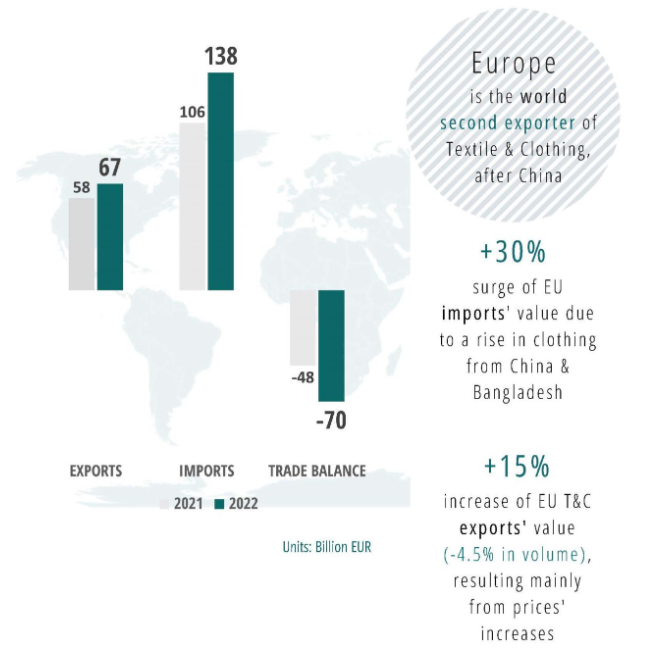
The Euratex Spring Report highlights significant differences between trade in value and volume. EU’s export of textile products has increased by 13% in value but actually dropped by nearly 7% in volume.
This reflects the very high inflation figures from last year, caused initially by the rising energy prices and changing central bank policies. This in turn leads to uncertainty with the consumer, resulting in low demand and gloomy prospects for the entire value chain.
Euratex explained that such a growing deficit is a cause for concern; the objective of the EU’s Industrial Strategy to strengthen its resilience and “strategic autonomy” is not happening. Instead, Euratex states, its dependency has increased and become critical in certain raw materials and fibres.
Director general of Euratex, Dirk Vantyghem said: “This report confirms once again that “textiles” is one of the most globalised sectors of the European economy, and hence the importance of taking that global dimension into account when designing EU and national policies. Failing to do so may have a devastating effect on the global competitiveness of the European textile industry.”
Looking forward, he added: “It is essential to stabilise inflation, restore consumer confidence and ensure a level playing field for all operators in the textile industry. On that basis, European companies can prosper and offer quality jobs to 1.3 million workers.”
Euratex said it understands that efforts are also required to strengthen the EU’s export performance, in order to rebalance trade relations with the rest of the world. It believes that EU companies are world leaders in high-end fashion products and in technical textiles.
Additionally, Euratex said more needs to be done to support its activities in established markets but also emerging economies. For instance, the ongoing free trade agreement (FTA) negotiations with India should focus on improving market access and ensuring “fair” competition with local companies.


