
Yeşim Group Co-CEO Selim Şankaya outlines how the Turkish manufacturer is hard-wiring “People First” into a performance-driven, data-led sustainability strategy—pairing circularity pilots like Ecollectiv with scaled, KPI-tracked rollouts; deepening supply chain transparency from farm to finished garment; and investing in digitalization, automation and clean energy to verify claims, cut impact and build repeatable models across regions.
Yeşim Group won the Innovation, Environmental, Social, and Diversity awards in the 2025 Just Style Excellence Awards.
Go deeper with GlobalData

Discover B2B Marketing That Performs
Combine business intelligence and editorial excellence to reach engaged professionals across 36 leading media platforms.

Just Style (JS): Congratulations on winning in the 2025 Just Style Excellence Awards. How does the success reflect Yeşim Group’s long-term vision for sustainability and innovation in the textile industry?
Selim Şankaya: Winning awards in four categories for two projects in the 2025 Just Style Excellence Awards stands as a powerful testament to Yeşim Group’s long-term journey “from good to excellent.” At the core of our performance-driven philosophy lies the principle of “doing the right thing in the best possible way,” which ensures that every step we take integrates sustainability and innovation hand in hand.
Our decisions, whether investing in new technologies or advancing social initiatives, are guided by strategic priorities such as reducing environmental impact, advancing digitalization and data-driven management, and developing agile and inclusive business models. This approach allows us to generate measurable and lasting value not only in production but also in our social and environmental contributions.
With this vision of growth that is sensitive to both people and the planet, we remain a strategic partner to the world’s leading brands while resolutely pursuing our ambition to lead the sustainable transformation of the textile sector.
JS: What steps have you taken to embed a culture of continuous improvement and inclusivity within Yeşim Group?
Selim Şankaya: At Yeşim Group, our guiding principle—People First—is the foundation that unites all our internal and external stakeholders around common objectives. By fostering an environment of mutual trust and respect at every stage of work, we view diverse perspectives as a source of value and generate synergy from this diversity.
The holistic collaboration we build between our departments and business partners is nourished by a culture of continuous learning, open communication, and transparent processes. At Yeşim Group, challenges are solved collectively, and efforts and successes are acknowledged jointly. This approach extends beyond day-to-day operations to include the planning, production, and sustainability phases of our long-term projects. Ultimately, shared responsibility and collective wisdom transform one of Yeşim Group’s corporate values — continually learning, supporting one another and improving each other — into tangible and measurable achievements.
JS: What systems or metrics do you use to track progress in areas like waste reduction, women’s empowerment, and community engagement?
Selim Şankaya: At Yeşim Group, social and environmental contribution is not defined by one-off initiatives but by an enduring element of our corporate identity. Our founder, my grandfather Şükrü Şankaya, instilled in us the People First philosophy, which has formed the backbone of our social responsibility culture for over 40 years and today shapes a long-standing ecosystem comprising 12 active projects in areas such as education, environment, and sports.
Innovative award-winning initiatives like Ecollectiv and Golden Stop are current examples of this approach, yet our continuity extends well beyond these. From women’s empowerment to education and sports, from child development to environmental protection, our projects have become intergenerational models sustained through regular impact assessments, volunteer engagement, and local partnerships.
JS: What emerging trends or technologies do you believe will most significantly influence the future of sustainable textile manufacturing?
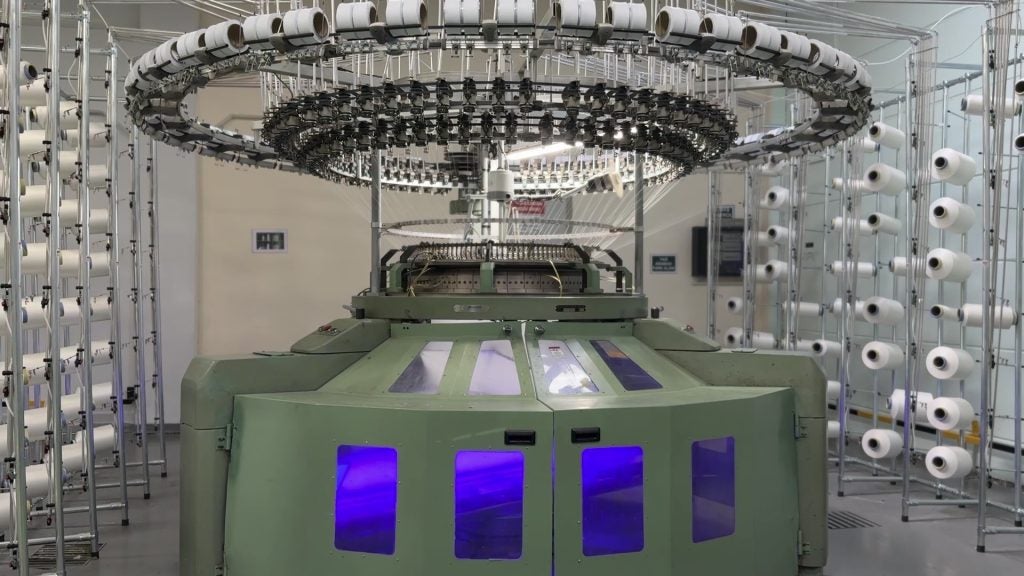
Selim Şankaya: The future of sustainable textile manufacturing is being shaped by a convergence of environmentally responsibility and digital technologies. Brands are increasingly adopting “take-back” programs where they collect old clothing from consumers to be repaired, resold, or recycled. The circular economy, reintegrating textile waste into the economy as new, value-added products – like our Ecollectiv project –, developments in textile-to-textile recycled yarn technologies will drive the sustainable textile industry. It will be important to produce products with a low environmental impact using sustainably sourced raw materials, highly energy-efficient processes and smart production systems.
Digitalization and automation are other technologies to focus on for sustainable textile manufacturing. These technologies will optimize every step of the manufacturing process and enable the creation of a secure, transparent, and traceable record of a garment’s journey from raw materials to finished product, which is also essential for recycling and to verify sustainability claims. All of these processes must also be powered by clean energy.
JS: How does Yeşim Group plan to scale or replicate the success of these projects in other regions or business areas?
Selim Şankaya: Scaling or replicating the success of a project in other regions or business areas is an essential process for long-term growth. We have a strategic and systematic approach, moving beyond the initial success to create a repeatable model. Innovation projects start with a small-scale pilot project.
The successful project is documented in detail, the KPIs determined at the outset are reviewed so they can be tracked and compared in large-scale projects or in new regions or business areas, and risk analyses are performed. Budget for scaling and financial forecasts are created. A successful project is transformed from a one-off achievement into a repeatable model step by step across our other production areas.
JS: How do you engage employees, customers, and local communities in your sustainability and empowerment initiatives?
Selim Şankaya: At Yeşim Group, we strive to make all our stakeholders as active participants in every process. In each project going beyond simply informing them, we involve them directly in the planning and implementation stages. Through regular meetings, on-site visits, and feedback mechanisms, we strengthen collective intelligence and create a structure where everyone can contribute.
Our Traceability of Cotton Project is a strong example of this approach; by working hand in hand with our customers and suppliers, we bring full transparency from farm to finished garment while jointly advancing responsible production and sustainable farming practices.
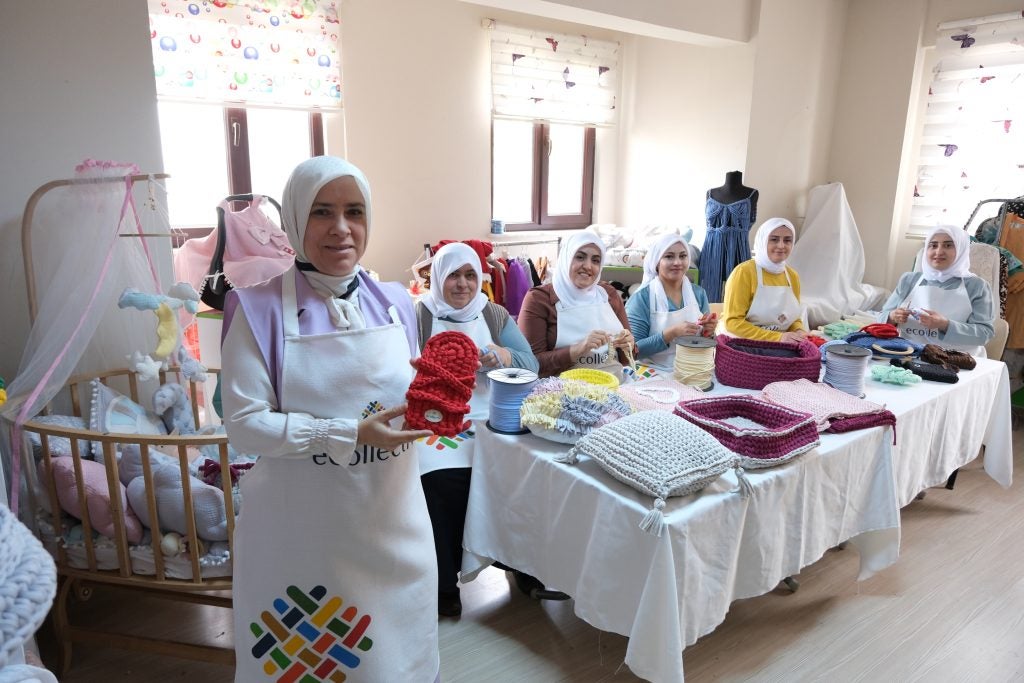
In the Ecollectiv initiative, we bring together suppliers, employees, NGOs, women’s cooperative, and students around a shared purpose by transforming textile waste into new products that generate both environmental and social value. Across all our efforts, we focus on uniting our stakeholders around a common goal and on creating a lasting impact on the environment, society, and the business world through a long-term sustainability vision.
JS: Looking back at Yeşim Group’s recent achievements, what accomplishment stands out most to you personally, and what continues to motivate you as a leader?
Selim Şankaya: What motivates me most as a leader is seeing Yeşim Group’s sustainability approach evolve over the years into a strong, values-driven culture guided by our “People First” philosophy. It is truly inspiring to witness how our long-term initiatives continue to grow stronger and deliver tangible benefits for people, the environment, and our employees. For more than two decades, we have been reaching thousands through projects in education, sports, and environmental awareness. Through the TEV Şükrü Şankaya Scholarship Fund, we support the education of young people, while under the Yeşim Sports Club, we have been inspiring children to play basketball and nurturing the athletes of the future for 22 years.
Our collaboration with the TEMA Foundationhas been fostering environmental awareness among students for over 20 years. The Yeşim Kindergarten, operating for 37 years, and our long-standing gender equality initiatives, which are recognized by UN Women through the WEPs Ambassador designation, are among the strongest reflections of this culture. More recently, our “Affection Support to Life” program has further deepened our commitment to diversity, equity, and inclusion. The continuity, growth, and achievements of these initiatives are what truly inspire me to move forward every day.
JS: Selim, thank you for sharing how Yeşim Group is turning “People First” into measurable, scalable impact. Your focus on data, transparency and repeatable models offers our readers a clear blueprint for embedding circularity and inclusivity. We appreciate your time and insights.


