


Taiwan is steadily strengthening its position as a global sourcing hub for sustainable and high-performance textiles, owing to its science and manufacturing depth, as well as policy and promotion projects. As brands face tighter environmental regulations, rising pressure for traceable supply chains, and growing demand for circular products, Taiwan’s textile sector is responding. The nation has an ecosystem built for speed, with advanced R&D, vertically integrated production, and a culture of collaboration across mills, chemical suppliers, and product developers.
To increase international visibility and support manufacturers in taking sustainable innovations to global markets, the Taiwan International Trade Administration (TITA), under the Ministry of Economic Affairs, has commissioned the Taiwan Textile Federation to implement the Textile Export Promotion Project. The initiative helps enhance Taiwan’s capabilities in greener materials and next-generation textile technologies, while strengthening the industry’s global competitiveness through international outreach and market engagement.
Sustainability challenges in the textile industry
Fibre production is intensive in terms of energy and resources. Dyeing and finishing can involve high water use and complex chemistries, and the industry’s rapid product cycles contribute to mounting waste. The challenge has become even more complicated as performance apparel expands. Waterproof-breathable laminates, stretch composites, and multi-material constructions often defy traditional recycling methods.
This tension between performance and end-of-life responsibility is the next challenge for innovation. The industry is moving towards bio-based and recycled materials, lower-impact dyeing and finishing, and recycling technologies that can handle blended or composite textiles. Taiwan’s textile manufacturers Libolon, Singtex, Paiho, and J&J are increasingly visible in this shift, translating technical expertise into scalable, brand-ready sustainability.
Taiwan’s advantage: integrated capability and innovation at scale
A defining strength of Taiwan’s textile industry is its ability to connect the full value chain, from polymer and yarn development through fabric engineering, dyeing, finishing, and functional treatments. This is important because sustainability requires coordinated decisions across materials, process settings, and performance specifications. Taiwan’s mills and material innovators are also known for moving quickly from lab to production, making the industry a practical partner for brands that need measurable progress fast.
Libolon, Singtex, Paiho, and J&J all demonstrate how this ecosystem is turning sustainability goals into tangible products, ranging from renewable polyamides and circular recycling breakthroughs to next-generation functional fabrics and advanced fastening solutions.
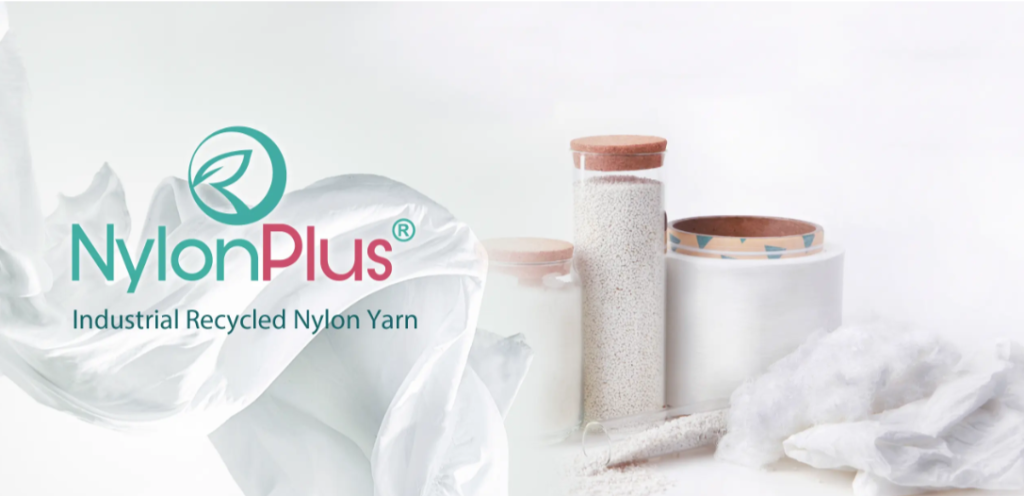
Libolon spans the full spectrum from polymerization through dyeing and finishing, which allows for systematic sustainability. Key product lines include RePET®, made from 100% post-consumer PET bottles, and NylonPlus®, crafted from post-industrial nylon waste, both meeting GRS, Oeko-Tex, and Bluesign standards. Ecoya offers solution-dyed yarns with 70%-80% less water and chemical use, while ReEcoya® combines recycled content with dope-dyeing to reduce emissions and enhance color fastness for outdoor gear, bags, and active apparel.
Meanwhile, their Closed-Loop Recycling Zero-Waste System with PolyPlus technology transforms fabric scraps, offcuts, and worn items into chips and yarns, feeding back into new product creation. Together, these innovations mean Libolon isn’t just improving parts of the textile supply chain, it is converting waste into high-quality, performance materials, and embedding circularity in its production model.
Suppliers of eco-friendly and functional textiles
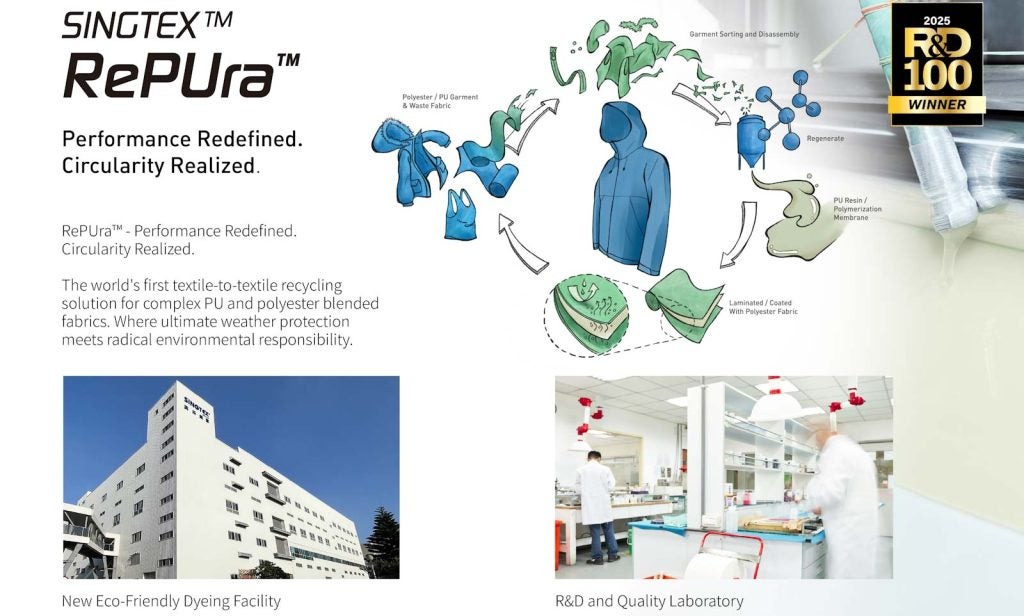
Singtex has consistently invested in innovation infrastructure, including a high-precision, eco-friendly dyeing and finishing R&D center established in 2007. Then in 2024, the company added a new eco-friendly dyeing facility. With numerous global environmental certifications, Singtex is positioned to support brands navigating compliance and sustainability verification.
The company’s headline innovation, RePUra™, has won an R&D 100 Award for tackling one of the industry’s most stubborn barriers to circularity – recycling complex composite textiles. Waterproof-breathable apparel commonly combines polyurethane, polyester, and spandex. These are materials that are difficult to separate and recycle mechanically. RePUra™ uses chemical depolymerisation and repolymerisation to breakdown polyurethane-rich composite waste into high-purity molecular components and regenerate them into high-performance recycled polyurethane materials.
J&B International: a leading functional fabric supplier
J&B International has built a cross-border supply chain across Taiwan and China. It is now strengthening that network in Southeast Asia with a new Vietnam facility. In H1 2026, J&B will build a jointly owned factory with Wah Yang International Holdings, following the creation of its local subsidiary, J&B Textile Vietnam. The plant will produce lightweight, elastic fabrics. It adds on-site dyeing, enabling faster sampling-to-bulk conversion, tighter quality control, and shorter lead times for brands manufacturing in the region.
The expansion also improves supply resilience. With Vietnam’s nylon supply still limited, J&B is partnering with a local yarn supplier to secure inputs for higher-end functional fabrics. Combined with its established development and production capabilities, the new Vietnam base helps J&B serve sports, outdoor, winter/ski, and leisurewear customers more efficiently while supporting sustainability priorities such as waste reduction and pollution prevention.
Paiho Group: expertise in shoe, garment, and medical material production
Paiho is globally recognized for its Trihook touch fasteners. It supplies many of the world’s top 20 sport shoe brands, underscoring its role in performance footwear where fastening, fit, and component durability can extend product life and reduce material waste. It has a broad manufacturing footprint across Taiwan, China (Wuxi and Dongguan), Vietnam, and Indonesia, supported by marketing bases and warehouses in California for faster global service.
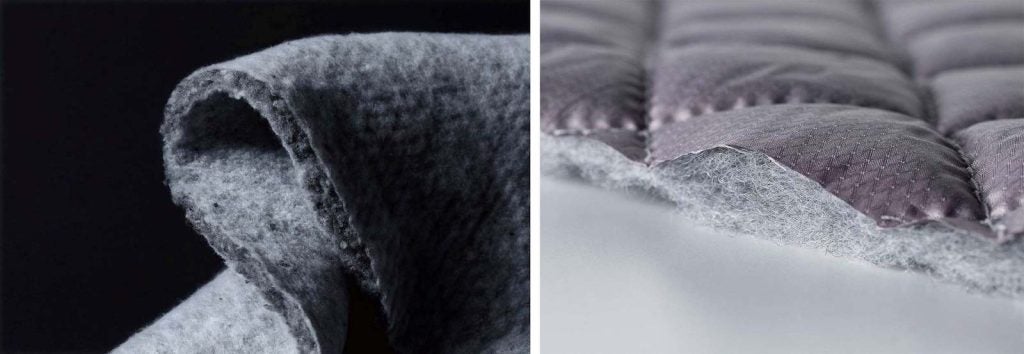
Beyond fasteners, Paiho’s portfolio spans digital woven fabric, 4-way stretch fabrics, elastics and webbings, shoelaces, reflective materials, 2D/3D logos, and value-added processing). It has also expanded into thermal outdoorwear materials with BamCoalTex Thermal Insulation, which embeds sub-micron bamboo charcoal particles in polyester to enhance heat retention for applications such as ski jackets, hiking boots, and sleeping bags.
Textile brands helping the shift towards sustainable innovation
Positioned as the only brand in Asia spanning both nylon and polyester, Libolon supports customers across every stage of production. This covers polymerization and spinning, weaving, dyeing, finishing, and post-processing. Libolon’s fully automated production lines, flexibility to balance large-volume output with adaptable manufacturing, and more than 40 years of technical experience have let Libolon reduce inefficiencies and improve overall lifecycle outcomes.
With global textiles businesses under pressure to increase sustainability, the innovations and initiatives underway in Taiwan provide a clear pathway for a more circular future.
Ad by TITA.
