
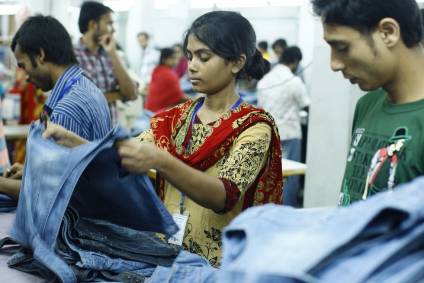
Bangladesh’s trade unions are again pushing for an increase in the minimum wage for workers in the country’s US$28bn garment industry.
For nearly five years the minimum wage in Bangladesh has been $68 and increasing this figure has been a longstanding demand of garment workers in the country, who cite rising living costs as a result of inflation.
Go deeper with GlobalData


Discover B2B Marketing That Performs
Combine business intelligence and editorial excellence to reach engaged professionals across 36 leading media platforms.
Unions and workers alike have previously faced a “severe crackdown” by the government in the face of such calls, they say. In December 2016, police detained 11 union leaders and workers’ rights advocates under the Special Powers Act 1974, while around 1,600 workers were suspended and police filed cases against 600 workers and trade union leaders.
The clampdown by authorities followed strikes in the Ashulia district of the Bangladeshi capital Dhaka on 12 December by workers demanding an increase in the minimum wage. Factory owners have taken a strong stand not to increase wages.
US brands add to calls for Bangladesh wage reviews
Two months ago, the Bangladesh Government formed a new wage board that will recommend a minimum salary for workers in the country’s garment industry following the recent labour unrest and calls for the implementation of a more transparent and regular wage review mechanism.
Bangladesh sets up new wage board for RMG sector
But now, under the banner of the IndustriAll Bangladesh Council (IBC), unions are again proposing hiking wages to BDT16,000 (US$192) a month from the current US$68 set in 2013 after the Rana Plaza collapse.
At the end of February, IndustriAll’s affiliates in Bangladesh’s garment sector organised a series of actions including a joint press conference and a human chain march.
The IBC has also submitted a memorandum containing workers’ demands to the chair of the newly constituted minimum wage board on 28 February.
“It has taken the government of Bangladesh a long time to set up the minimum wage board, and now we hope that it will take swift measures to fulfil workers’ demands,” says Apoorva Kaiwar, IndustriAll regional secretary. “An increase in minimum wage will have a progressive impact on the standard of living, and it will also go a long way to promote decent work and the country’s economy.”
In addition to a new minimum wage, the IBC is demanding that job grades are streamlined; from seven to five, on which workers’ pay is based. They are also proposing a promotion criteria – absent in the current system – where workers in the fifth grade should be promoted to fourth grade after one year of work. Subsequently after every two years of continuous work, workers should be promoted to upper grades.
Furthermore, the IBC want a 10% annual increase in payment. Piece rate workers are paid according to the production of each unit, and the piece rate is often decided only after workers complete a certain amount of work; a system which often leads to disputes, explains IndustriAll. The unions say that payment for piece rate workers should be decided before the work starts.
The IBC also wants to restrict the training period for apprentice workers to three months, as opposed to the current practice of extending it to six months, while wages for apprentices should be raised from $50 to $120.
The calls follow two pushes last month by Bangladesh labour rights groups for increased pay for garment workers.
Bangladesh unions want garment wages to triple
Bangladesh unions again urge tripling of garment wages


