
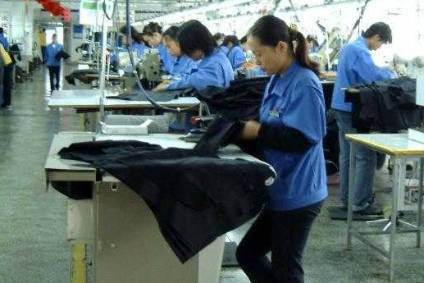
The Ethical Trading Initiative (ETI) is urging companies to embed the #MeToo movement into their supply chains, particularly in the lower tiers, to help address gender inequality and discrimination against women workers.
The #MeToo movement against sexual harassment and sexual assault has many local and international alternatives – and spread virally in October 2017 as a hashtag used on social media to demonstrate the widespread prevalence of sexual assault and harassment, especially in the workplace.
Go deeper with GlobalData

Discover B2B Marketing That Performs
Combine business intelligence and editorial excellence to reach engaged professionals across 36 leading media platforms.
“Gender inequality can be found in most industries in most parts of the world,” the ETI says. “Women and girls are more likely than men to be employed in low skilled jobs, including informal or precarious work, and often lack the skills and confidence to progress to more stable, better paid employment.
“Yet tackling gender inequality and discrimination not only benefits women workers and wider society, it is also good for business. A mounting body of evidence shows how it can help manufacturers boost productivity while reducing absenteeism, staff turnover, overtime and production errors.”
In a bid to help address the root causes of inequality, ETI has published new guidance summarising likely gender issues in supply chains and how businesses can respond.
Published in two parts, the first sets out the rationale for addressing gender inequality, including the key factors that affect women given their specific vulnerabilities. This includes ensuring freedom of association; working conditions are safe and hygienic; child labour is not used; living wages are paid; working hours are not excessive; no discrimination is practised; regular employment is provided; and no harsh or inhumane treatment is allowed.
The second part, meanwhile, outlines a graduated approach to the integration of gender equality and women worker’s rights using a human rights due diligence approach, with examples of best practice.
“Women are disproportionately represented in the lower tiers of supply chains and are currently without much hope for progressing towards more productive and better paid work,” says ETI’s senior advisor on gender and diversity, Halima Ahmed. “This is bad for women and bad for business. Companies need to better understand the risks and vulnerabilities that are particular to women workers. And take steps to address them.”
Ahmed says that while the #MeToo movement has drawn invaluable attention to the fight against sexual abuse, it now needs to be extended into global supply chains and be used as a springboard to help upgrade women’s labour rights.
“When women are respected and can earn a decent income, there is a multiplier effect. They support themselves and their families and contribute to the development of more sustainable communities and economies everywhere.”
See also: Tackling sexual harassment in the garment industry



