
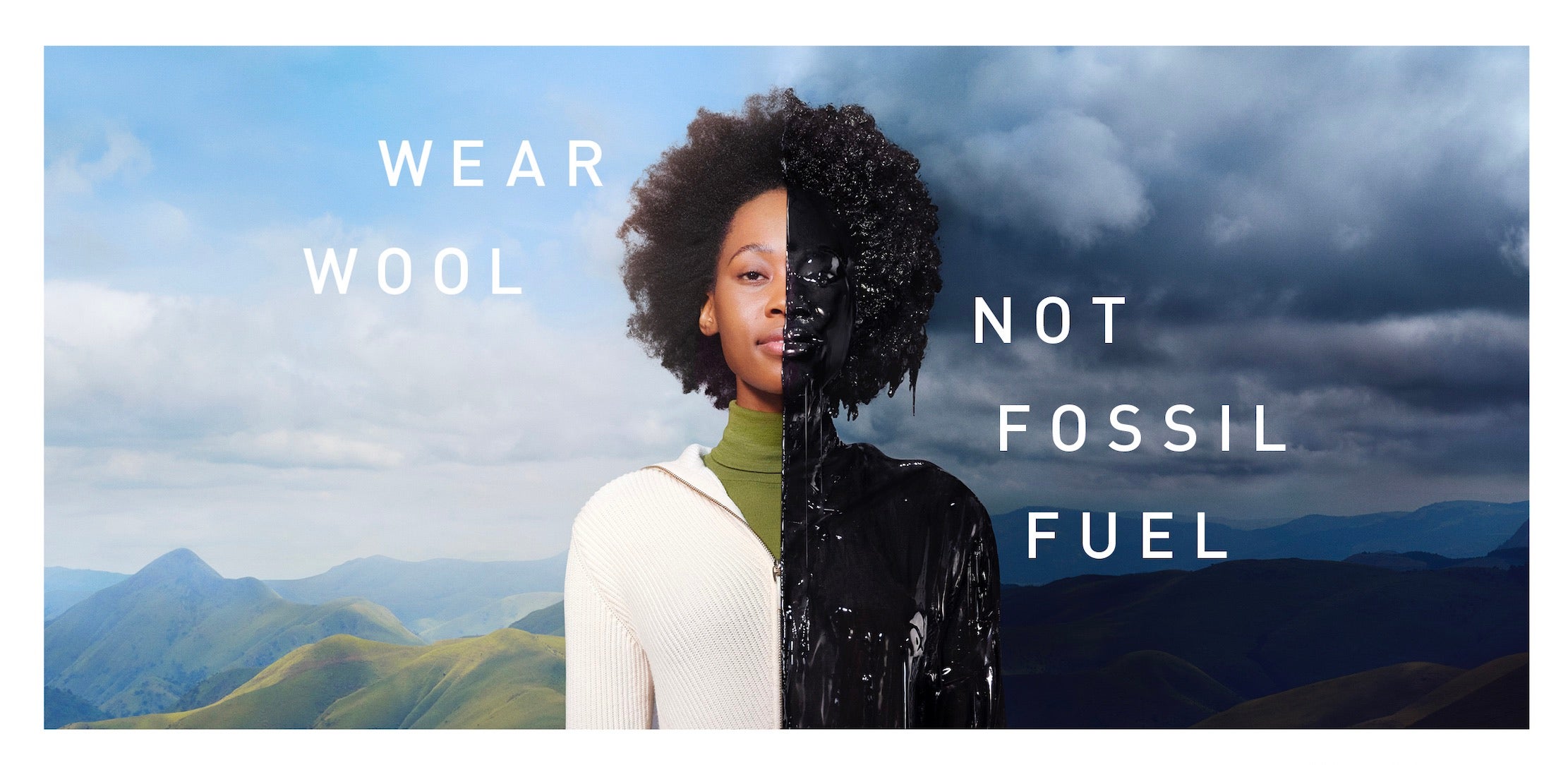
The ‘Wear Wool, Not Fossil Fuel’ initiative, launched by The Woolmark Company, features a series of powerful visual messages that highlights the link between fabrics made from synthetic fibres and the crude oil used in its manufacture.
The work is tailored to film and out of home advertising, with initial activity scheduled in the US, UK, France and Australia for September.

Discover B2B Marketing That Performs
Combine business intelligence and editorial excellence to reach engaged professionals across 36 leading media platforms.
Research conducted by The Woolmark Company has shown that while more than one third of global consumers say they are willing to pay more for sustainability, fibre consideration does not feature in the purchase journey at all.
Furthermore, the research highlighted that consumers are not making the link between synthetic fibres and fossil fuels.
The launch centres around a 60-second hero film showing people struggling to escape an oil-filled swimming pool, based on the insight that every 25 minutes, an Olympic pool’s worth of crude oil is used for synthetic clothing, which amounts to almost 350 million barrels per year.
Wool versus synthetic fibres
“It is predicted that in just ten years’ time, 73% of the entire clothing market will be made from synthetic fibres, which are derived directly from fossil fuels,” says The Woolmark Company managing director John Roberts. “The impact these clothes have during the use and end of life stages of their lifetime cannot be underestimated. In fact, it’s been said the equivalent of 50 billion plastic bottles’ worth of microfibres enter wastewater every year just from washing. Science shows that wool fibres biodegrade in both land and marine environments, so we know that Merino wool does not contribute to microplastic pollution.
“Studies also show that wool clothes are amongst the oldest in wardrobes, with high levels of reuse and donation, along with high levels of recycling and commercially viable end-of-life pathways. These factors alone indicate why choosing clothes made from natural fibres, such as Merino wool, are so important in transitioning to a circular, slow fashion model.” Fran Docx, strategy partner, 20something, adds: “Back in 1980, our wardrobes were filled with natural materials like cotton, wool and cashmere. These natural fibres made up 60% of the market, far outstripping the relatively new polyester and polyamide alternatives. The rise of fast fashion, Instagram outfit culture and turbocharged consumerism has seen a wholesale shift in what lurks in our wardrobes. We rarely make a wider ecological connection between clothes, the fibres they’re made of, and the impact on the planet. Our ambition for our work with The Woolmark Company is to address that and raise awareness of the alternatives to synthetic fabrics.”
Wool is certainly growing in appeal amongst brands. Farfetch has reported 115% increase in purchases of wool products year on year, according to The Woolmark Company, while the major Italian wool manufacturing regions are reporting a 30% increase in knit revenue.
There has also been a 76% increase in brands and boutiques including ‘merino wool’ in product titles, for positive association, according to Farfetch, while more sports and activewear companies are seeking to increase their natural fibre use, such as Saloman, Castore, and Nagnata.


