
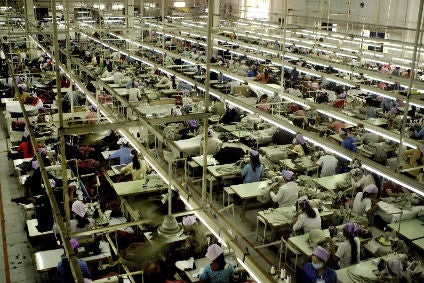
The Sustainable Apparel Coalition (SAC) is hoping its improved Higg Facility Environmental Module (Higg FEM) will be deployed globally at 20,000 apparel and textile factories and across 400 brands by the end of 2018.
Already used by around 8,000 businesses globally, the updated self-assessment tool standardises sustainability measurement for apparel, footwear, and textile manufacturing facilities – and is said to enable factories of any size, anywhere in the world, to assess sustainability performance and easily share results with supply chain partners.
Go deeper with GlobalData


Discover B2B Marketing That Performs
Combine business intelligence and editorial excellence to reach engaged professionals across 36 leading media platforms.
Its goals are to help reduce audit fatigue and improve performance benchmarking by measuring water use, waste, emissions, and assessing chemicals management with increased analytics. It also allows business partners to collaborate more successfully to drive performance improvement across the value chain.
“The improved Higg Facility Environmental Module breaks down silos created by the lack of transparency in our industry,” explains SAC CEO Jason Kibbey. “With the Higg FEM, supply chain partners can better see one another’s performance and make valuable sustainability improvements in factories around the world.”
The SAC collaborated with the Outdoor Industry Association and the Zero Discharge of Hazardous Chemicals Program to develop the tool’s new chemicals management section, which tailors questions based on individual business needs. Cut and sew factories, for example, will not need to answer questions about wet processes that do not apply to them.
To ensure score accuracy and enable transparency, third-party verifiers approved by the SAC will confirm the data submitted by each facility.
Outdoor brand Patagonia is one of the companies currently using the tool. “The theory of change of the SAC is straightforward and profound: putting standardised sustainability measurements that are both deep and profound in the hands of key decision-makers in the apparel and footwear value chain will incentivise them to make better decisions that collectively reduce the environmental impact and increase the social justice of the entire industry,” says Rick Ridgeway, VP of public engagement at Patagonia.
“With Higg FEM, the Coalition has taken the biggest step yet towards proving that theory, and showing the world how the industry that started the industrial revolution is leading the world into the sustainability revolution.”
Through a campaign called Link by Link, the SAC is calling upon its 200-plus members to deploy the tool globally at industrial scale.



