
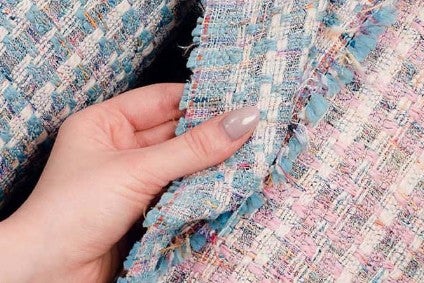
Fashion technology provider Tukatech has introduced what it calls the first feel factor value for fabrics based on a mathematical calculation using bend and surface friction values in all warp, weft, and shear directions.
The firm says the feature helps in 3D product design as customers can quickly relate fabric feel without having to wait for a physical sample which can delay the development process.
Tukatech describes the innovation as a number which someone may be able to learn and associate in their mind when imagining what the fabric will feel like. The relational value comparison is based on many fabrics familiar to users.
It draws comparisons to understanding a weather report where, for example, the temperature is 56 degrees Fahrenheit but “feels like” 65. A similar analogy has been applied to fabrics, Tukatech explains.
“For example, most apparel people know from experience how soft a fine silk scarf feels and know that raw denim or burlap is rough. A number can be assigned to fabrics that will convey to the mind the feel factor of the fabric. If the softest fabric was a ten on a scale of one to ten and the roughest was a one, then other fabrics fall in between.
“This determination from most used fabrics now can be classified with reference number for each and a feel factor for new fabric will help the design community to digitally feel the fabric while they can see the drape and movement of fabric in TUKA3D. These values can then be tabulated and the mean for each fabric taken and assigned to that fabric.”
Ram Sareen, CEO-founder of Tukatech, adds: “What do you feel when someone say it feels soft like baby’s skin, or it tastes too salty, or the sound is too loud. As humans, we do have our sensory abilities to predict taste or listening on a decibel factor, same senses can relate these ‘feel factor’ to predict the feel of fabrics by comparison numbers of known fabrics.
“We wanted to give designers the feel factor to help speed up the product development process in digital format, as well as give consumers the ability to digitally feel the fabric before making their purchase.”


