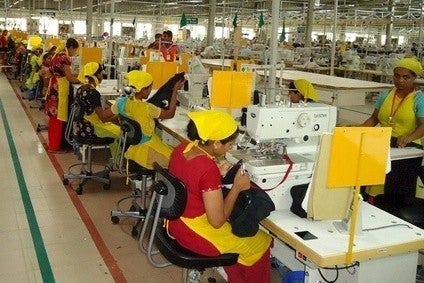
A new training scheme has been launched in Bangladesh as part of a wider bid to get more women into supervisory roles in the country’s garment sector.
Part of the Gender Equality and Returns (GEAR) initiative, a collaboration between the International Labour Organization (ILO) and the International Finance Corporation (IFC), the new scheme was launched last week to coincide with International Women’s Day.
GEAR is a special initiative of Better Work Bangladesh – jointly implemented by IFC and the ILO. Rolled out in 2016, the programme has made significant strides in advancing women’s economic potential and improving access to better jobs and opportunities for women.
Despite 80% of line operators in the sewing sections of the garment sector being women, 19 out of 20 line-supervisors are male, according to the ILO and the IFC. This means 90% of the managerial talent in factories comes from just 20% of the workforce.
“Gender equality and gender empowerment was one of the core founding principles of the ILO in 1919. 100 years on and this is still central to our work. But much more needs to be done in advancing gender diversity – not just in the RMG sector but in every sector,” says Tuomo Poutiainen, country director, ILO Bangladesh.
To date, GEAR has trained 144 female workers; 58 of whom are now in supervisory roles. Impact assessment shows that lines led by GEAR-trained females experienced an average increase of 5% in efficiency. In addition, the GEAR-promoted female supervisors also saw – on average – a 39% increase in salary.
US Tariffs are shifting - will you react or anticipate?
Don’t let policy changes catch you off guard. Stay proactive with real-time data and expert analysis.
By GlobalDataAfter a successful pilot, Better Work is scaling up GEAR to train 700 female operators and their managers in 70 factories to promote career-progression opportunities for women in the RMG sector.
“Increasing efficiency and broad-based employment is a key part of competitiveness for the RMG sector. There is a strong business case to having more females in leadership positions. Through the GEAR programme, we hope to actively work on increasing career-progression opportunities and promotion of women and addressing the gender imbalances in leadership roles in the garment sector,” adds Nuzhat Anwar, acting country manager at the IFC.