
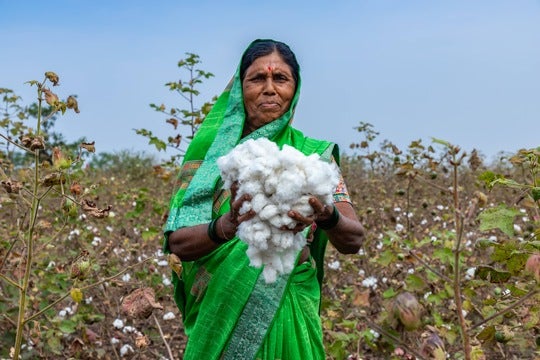
AbTF shared that the number of RCS-verified farmers in Tanzania rose by 87.8% compared with the previous year, reaching around 37,000. In India, nearly 5,000 farmers are now certified under the standard.
The organisation said the standard is designed to improve the resilience and productivity of small-scale cotton farming while delivering benefits for soil health, rural communities, biodiversity and animal welfare.
Go deeper with GlobalData


Discover B2B Marketing That Performs
Combine business intelligence and editorial excellence to reach engaged professionals across 36 leading media platforms.
In India, auditors rated implementation of requirements around transparency, fairness in cooperation and working conditions as very good. Compliance with measures aimed at restoring soil health and improving biodiversity was also assessed positively.
Several improvements were highlighted during the latest verification cycle, including the expansion of learning opportunities for smallholders through 38 new demonstration areas for regenerative cotton cultivation, bringing the total to 50 sites for sharing best practice.
Other developments included improved access to protective clothing for farmers, greater awareness and use of water collection systems to improve efficiency, and positive changes in animal welfare linked to open grazing practices.
In Tanzania, auditors pointed to stronger resilience among small-scale farms, including improved market access for rotation crops, as well as closer cooperation with authorities to identify conservation areas and support training for farmers to protect vulnerable ecosystems and endangered species.
The report also highlighted steps to improve soil health and increase soil organic matter, alongside greater use of natural pest control methods.
Nearly 5,000 farmers in the Indian state of Maharashtra remained unchanged year-on-year, while growth in Tanzania accounted for the overall increase in certified farmers across the programme.
Commenting on the findings, Alexandra Perschau, head of cotton standards at AbTF, said: “Considering how extensive the criteria of the Regenerative Cotton Standard® are, we are thrilled with the verification results. The independent auditors’ findings underline the considerable commitment displayed by implementation partners and by the associated small-scale farmers. They are working hard to put RCS criteria into practice.”
Verifications are carried out independently using a risk-based approach and include on-site field inspections, interviews and document checks with both implementation partners and farmers.


