
The German government has been accused of trying to weaken measures that would track how well companies in the country identify and respond to possible human rights abuses in their supply chains.
The parties making up Germany’s coalition government last year agreed that if the country’s large companies don’t voluntarily address supply chain and other human rights abuses sufficiently by 2020, the government will consider creating laws that require them to do so. Companies would have to identify, mitigate, and account for the human rights impact of their activities.
Go deeper with GlobalData

Discover B2B Marketing That Performs
Combine business intelligence and editorial excellence to reach engaged professionals across 36 leading media platforms.
However, according to Human Rights Watch, any proposed law on supply chains depends in large part on how thoroughly the government is monitoring companies’ performances.
And it says the proposed monitoring system has been derailed by disagreements among government officials.
“A questionnaire for self-reporting on the topic was supposed to have been sent out to companies based in Germany with more than 500 employees for them to respond to between May and July. But this process has stalled, and the questionnaires have yet to be distributed because the German Ministry of Economic Affairs and Energy disagrees with the plan,” the NGO says.
“The Economics Ministry is putting forward a proposal that would make it far too easy for companies to be categorised as complying with international human rights standards when they are not doing the job,” says Juliane Kippenberg, associate children’s rights director at Human Rights Watch.
“There is a risk that the monitoring system will be misused as a political tool to avoid tougher government measures on companies – most importantly, the passage of a much-needed law on supply chains.”
Whereas supply chains are composed of all steps needed to make a product – from obtaining raw materials to shipping, manufacturing, and retail – the ministry is proposing a monitoring system that would allow the government to categorise more companies as complying with government standards for responsible sourcing, HRW says.
“It suggests that rather than only two categories – “compliant” and “non-compliant” – there should be four, including those “with compliance plans” and “partially compliant.”
Germany’s 2016 National Action Plan on Business and Human Rights foresees a “robust” monitoring system to assess company performance, “which is far from the Economic Ministry’s current proposal.”
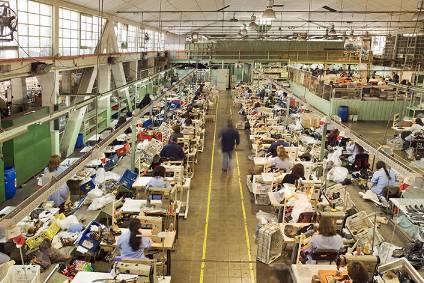
According to the International Labour Organization (ILO), more than 450m people work in supply chain-related jobs. Human Rights Watch has documented labour abuses in global garment supply chains, including excessive or forced overtime work, denial of breaks, pregnancy discrimination, and attacks on trade unionists.
While a number of German apparel companies have joined the German Partnership for Sustainable Textiles, “many of these companies still do not adopt basic human rights due diligence good practices, such as supply chain transparency,” HRW claims.
In addition, changes in apparel companies’ purchasing practices and the introduction of quality grievance redress measures for workers in their global supplier factories are critical to mitigate labor abuses in global supply chains.
“The government should show that respect for international human rights norms at home and abroad and Germany’s economic interests are not mutually exclusive, and that support for good practices can enhance economic growth,” Kippenberg says.


