
Apparel suppliers continue to bear the brunt of poor purchasing practices, according to first findings from the next Better Buying report, with a majority of apparel buyers not paying for samples, and one in ten never broaching the issue of factory conditions.
Now into its second rating cycle, the Better Buying initiative encourages apparel and footwear suppliers to rate the purchasing practices of their customers, with feedback shared anonymously across seven key categories to enable buyers to improve their performance.
Go deeper with GlobalData


Discover B2B Marketing That Performs
Combine business intelligence and editorial excellence to reach engaged professionals across 36 leading media platforms.
These areas include planning and forecasting, design and development, cost and cost negotiation, sourcing and order placement, payment and terms, management of the purchasing process, and CSR harmonisation.
The second benchmark report is due to be released later this month, and offers new insight into pain points for suppliers, according to Better Buying co-founder Dr Marsha Dickson.
“There are buying companies out there that aren’t asking for anything whatsoever. They don’t even bring up the subject of what the workplace conditions are like”
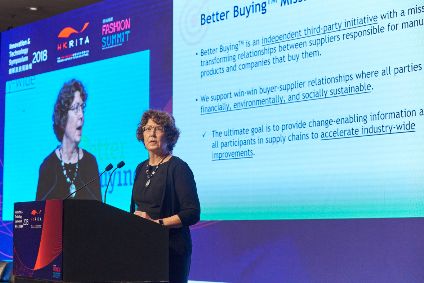
“One of the new questions asked in the latest ratings cycle was about what happens when the forecasts are not accurate,” she said in a “sneak peak” of the results shared with delegates at the recent Innovation and Technology Symposium at the Fashion Summit (Hong Kong) 2018.
“We asked a question about the booking that was made or capacity that you reserved as a supplier for a particular buyer, and then how the orders came in against that capacity booking.
“But we also asked, ‘What do you do with any leftover capacity?’ And we find that not too many buyers are coming through on their commitments for the space you reserve for them. And that puts the supplier in a situation where they need to scramble to find orders. So you can imagine how this connects to the financial situation of your company.”
In fact, 36% of ratings report unused capacity; with just one supplier saying the buyer paid for this unused capacity. Instead, the reality for many suppliers was seeing their capacity going unused – or having to accept last-minute low-priced orders to try to fill it.
Some other new findings from this cycle: “We continue to see a minority of suppliers (46%) being incentivised for compliance. We hear more and more that buying companies are assessing suppliers on not only quality, price and delivery, but also on their sustainability initiatives. But we’re not seeing the majority then act with incentives such as larger volume orders.”
Likewise, the majority of buying companies – 61% – are not paying for samples. “Some suppliers say, ‘It’s okay. I expect that. I build that into my overhead and I think it’s just part of doing business.’ But others are quite adamant it’s wrong, that the cost needs to be captured and needs to be paid for.”
Another new finding “that’s actually surprising,” is that around 10% of buying companies have no expectations for workplace conditions. “There are actually buying companies out there that aren’t asking for anything whatsoever. They don’t even bring up the subject of what the workplace conditions are like.”
The number of supplier ratings has increased 118% over the first rating cycle, with most ratings coming from suppliers based in China, followed by Hong Kong and Bangladesh.
20 buying companies have also been praised by working with Better Buying to encourage their suppliers to rate. These are: Bestseller, Bonmarché, Eileen Fisher, G-Star RAW, JP Boden & Company, K-mart Stores (Australia), Mountain Equipment Co-Op, New Balance International, N Brown, Nike, O’Neill Europe, Outerstuff, Reformation, Rohan Designs, Schijvens Confectiefabriek Hilvarenbeek, Target Corporation, The White Company (UK), WE Europe, Whistles, and White Stuff.
Results from the first rating cycle were covered in a ‘Purchasing Practices Index Report Spring 2018’ released in May this year. It found that a long relationship between buyers and suppliers does not correspond to better buying practices; and over 60% of suppliers are not provided any incentives for being compliant to buyer codes of conduct.
The next rating cycle is due to start on 1 November.



