

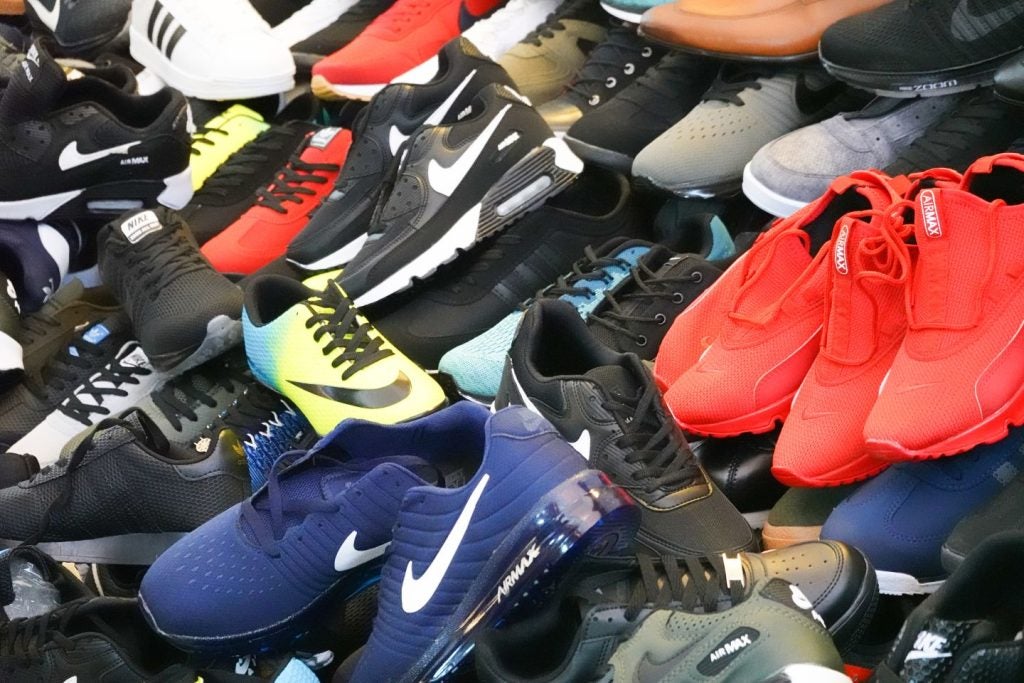
The American Apparel and Footwear Association and quality assurance provider, Intertek, released a new study, “Unboxing Fake Fashion Unleashing Real Dangers" which reveals alarming evidence that counterfeit apparel, footwear, and accessory products present serious chemical and product safety hazards to consumers.
The study includes four case studies drawn from the failed products, a list of all products tested, policy recommendations, and methodology.
Findings on the failed products include:
- Of the 39 counterfeit products tested—including clothing, footwear, and other accessories—16 products (41%) failed to comply with US and international product safety standards.
- Of the failing products, eight—representing more than 20% of the total counterfeit samples—failed due to excessive phthalate levels.
- One product contained nearly 327,000 parts per million of diethyl phthalate (DEP), exceeding the regulatory limit by more than 650 times, as outlined within AAFA’s Restricted Substances List (RSL).
- Five products failed for PFAS, six for alkylphenols and alkylphenol ethoxylates (AP/APEOs), three for bisphenol-A (BPA), two for formaldehyde, and three for heavy metals.
- One product notably contained 191 parts per million of lead, while another contained almost ten times the regulatory limit for formaldehyde.
- All of the hazardous chemicals found in the tested counterfeit products are listed as restricted or banned chemicals in AAFA's RSL.
At least 25% of the failed counterfeit products were purchased on or marketed through the Meta platform. This finding suggests a high propensity of consumers are purchasing counterfeit goods through social media platforms, such as Facebook.
Meta did not return request for comment when approached by Just Style.
“Counterfeiting is not just an issue of consumer trust or brand protection, it is an issue of public health,” said Steve Lamar, president and CEO of AAFA. “These results, building on our 2022 study, show that counterfeit products, often purchased through unregulated third-party marketplaces, continue to pose real risks to American consumers. It’s time to act decisively to safeguard consumers from dangerous counterfeits. We call on policymakers to immediately address the very real dangers being trafficked online.”