
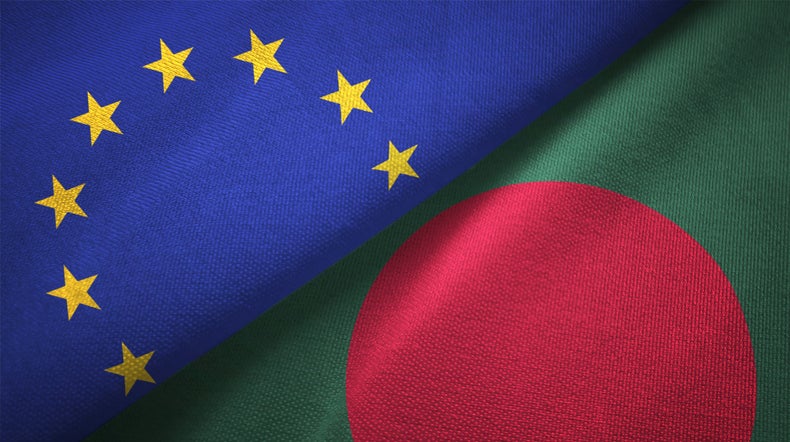
The cooperation agreement was formalised by EU High Representative Kaja Kallas and Bangladesh’s Foreign Minister Khalilur Rahman on 21 April in Brussels.
The PCA sets out a broad framework to strengthen cooperation across political dialogue, trade and investment, and strategic areas including energy, transport, agriculture, migration, security, finance and maritime affairs. It also includes commitments tied to democracy, human rights, climate action and sustainable development.
Comprising 82 articles, the agreement reflects a more structured approach to bilateral engagement and is expected to support deeper integration across multiple sectors relevant to global supply chains.
Negotiations between both parties began in late 2024 and concluded earlier this year. The initialling of the text clears the path for formal signature and ratification, after which it will replace the existing 2001 Cooperation Agreement.
Trade remains a central pillar of the relationship. The EU is Bangladesh’s largest trading partner, with bilateral trade exceeding €22bn (£25bn). Since 2001, Bangladesh has also benefited from the EU’s ‘Everything But Arms’ (EBA) scheme, which provides duty-free and quota-free access for all exports except arms and ammunition.
BGMEA had not responded to Just Style’s request for comment at the time of writing, and Euratex declined to comment.
Demand in Europe and the US – Bangladesh’s two largest apparel markets – remained under strain, with cautious retailer orders weighing on suppliers.