

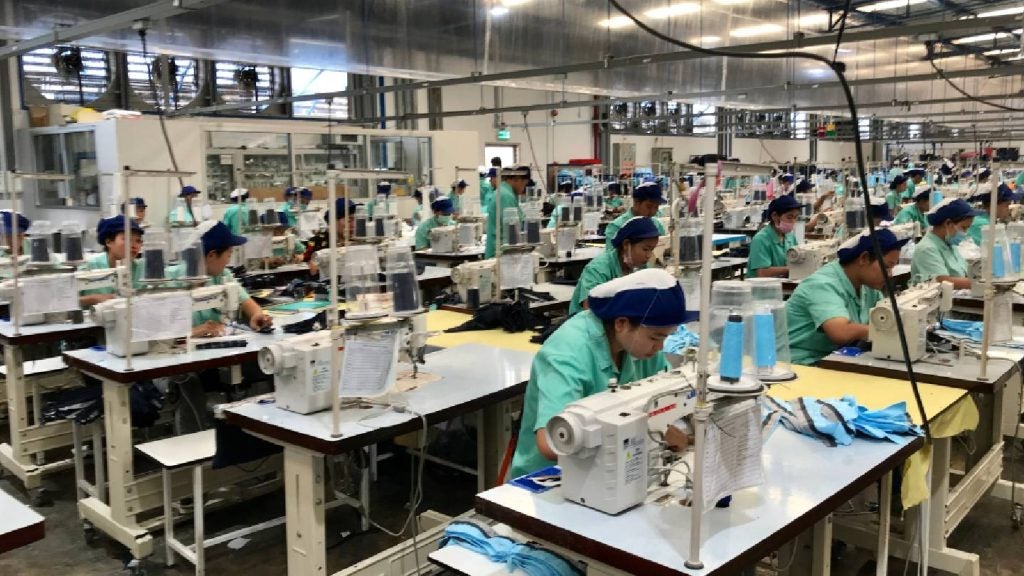
Titled ‘Mitigating Heat Stress in the Garment, Footwear and Travel Goods Sector,’ the 36-page report is a collaborative effort drawing on insights from Cornell University’s Global Labor Institute (GLI), the International Labour Organization (ILO), the International Finance Corporation (IFC) Better Work programme, and other technical experts.
The paper offers a comprehensive analysis and sets forth recommendations to better regulate, prevent, and reduce occupational heat strain, drawing on consultations held in Cambodia's capital, Phnom Penh, in January 2026 with the Cambodian government, employers, fashion brands, worker organisations, and experts.
According to GIZ’s report, Phnom Penh, has experienced one of the most significant increases in extreme heat days among major global apparel hubs.
The average number of days exceeding 35°C annually in Phnom Penh surged from 35 days during 2005-2009 to 112 days in the period from 2020-2024.
The report reveals that 82% of factories recorded indoor temperatures surpassing the 32°C threshold in their hottest production areas.
“One in three factories experienced days when indoor temperatures exceeded 35°C. Almost 53% of factories recorded indoor temperatures above 32°C while also being hotter than concurrent outdoor temperatures,” the report states.
Health and safety threats
The report underscores the severe impact of extreme heat on the working conditions within Cambodia's garment, footwear, and travel goods (GFT) sector.
This sector, which employs approximately 1.2 million workers, is allegedly exposed to high temperatures, which are intensified by heat-generating machinery, poor ventilation, dense production areas, physically demanding tasks and clothing or protective equipment that traps heat.
Such environments contribute to a range of health issues, including fatigue, dehydration, heat exhaustion/storke, reduced concentration, discomfort, and an increased risk of accidents and heat-related illnesses. Over time, these conditions are said to pose significant long-term health risks to workers.
The gender dimension of this issue is particularly concerning, as women constitute 78% of the workforce in this sector. The report says women workers, especially those who are pregnant or engaged in physically demanding roles, face heightened risks from heat exposure.
The report highlights the need for targeted interventions to protect these vulnerable groups.
Economic and productivity threats
The GFT sector is a major contributor to Cambodia's economy, generating $15.7bn in export revenue in 2025.
However, the report highlights that heat-stressed workers often experience a phenomenon known as "presenteeism," where they are present but unable to perform at full capacity, leading to measurable declines in efficiency and output.
In addition, it notes that heat stress contributes to absenteeism, as workers fall ill and need time to recover. It can also impair decision-making, increasing the risk of workplace accidents.
"Together, these effects translate into reduced productivity, lower wages for piece-rate workers, and broader losses for businesses and national economies in garment-producing regions," the report states.
Without immediate adaptation measures, Cambodia's apparel industry could face an 18% loss in potential export earnings by the end of this decade. This decline could also result in the sector creating 50,000 fewer new jobs by that year.
Recommendations
To mitigate these threats, the report calls for a coordinated sector response involving multiple stakeholders.
Key recommendations include the implementation of clearer regulations, practical factory-level actions, and enhanced worker participation.
The report suggests piloting and scaling heat stress measurement across factories and revising Cambodia's 2002 Ministerial Regulation on Workplace Thermal Environments (Prakas 147) to establish heat-specific Occupational Safety and Health (OSH) standards.
Factories are encouraged to conduct comprehensive heat risk assessments and develop written heat stress management plans. These plans should include strategies for improving ventilation, providing adequate hydration, and ensuring rest breaks for workers.
Additionally, the report urges buyers sourcing from Cambodia to make public commitments to supporting heat-safe working conditions, aligning their purchasing practices to reduce heat stress.
The report added: “Heat stress is a shared risk and a shared responsibility. Regulation alone will not solve it. Nor will isolated factory pilots or individual brand initiatives. Cambodia needs a coordinated sector response built around measurement, prevention, worker participation, buyer alignment, and practical factory support.
"The opportunity is clear. By acting early, Cambodia can protect workers, reduce productivity losses, strengthen compliance, and show global buyers that its GFT sector is preparing seriously for a hotter climate. Heat-safe production should become part of Cambodia’s responsible sourcing proposition. In a warming world, it is not only about good worker protection. It is a sound industrial strategy."