

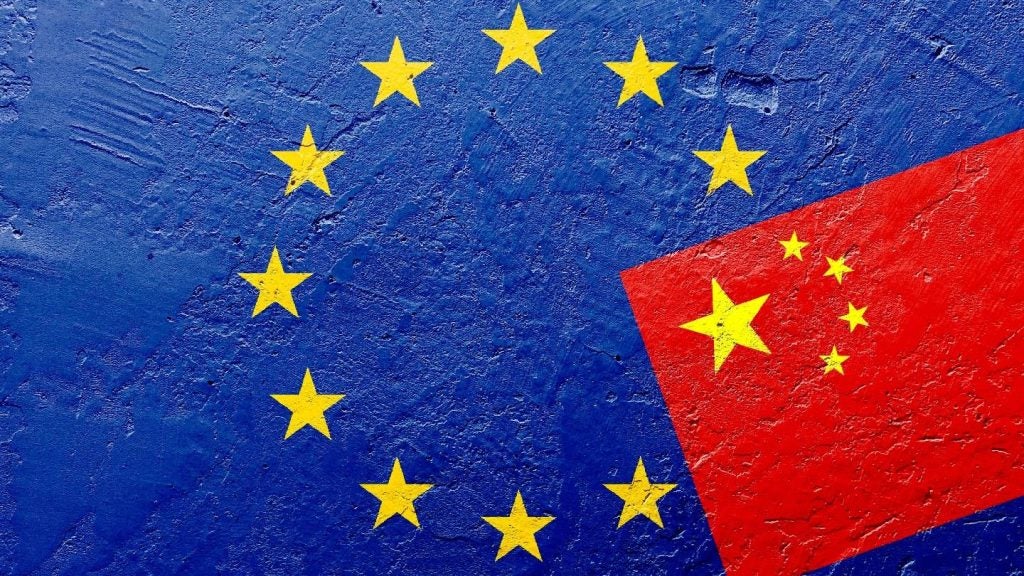
The decision follows an investigation that revealed Chinese producers were selling nylon in the EU at “dumped prices”, causing harm to European manufacturers.
The probe was launched after a formal complaint filed on 16 June 2025 by the Ad Hoc Coalition of European Producers of Yarns of Polyamide, acting on behalf of the Union industry under Article 5(4) of the Basic Regulation.
According to the Commission, the submission presented sufficient evidence of dumping and resulting injury to warrant opening the investigation.
Within the EU, Nylon industry is concentrated in Croatia, Italy, Spain, Romania and Slovenia, collectively providing around 2,000 jobs.
Nylon yarn, known for its high-performance properties and versatility, is used extensively in textiles such as outerwear, sportswear, hosiery and swimwear. It represents a €400m market in the EU.
The Commission's action follows wider effort by the EU to counter what it views as "unfair price competition" from China across multiple sectors. It says the new duties "preserve access to imports while restoring fair competition" in the region.
The EU has also recently introduced a flat customs fee of €3 ($3.4) per item on low-value consignments, shipments worth up to €150, entering from outside the bloc.
Beijing has criticised these measures, characterising them as “protectionist”. In a position paper published on 28 July, China’s Ministry of Commerce (MOFCOM) said that accusations regarding excess Chinese capacity and market flooding are being used as a pretext by other countries to restrict Chinese exports.
MOFCOM urged for a more “objective and dialectical” view of global market dynamics, emphasising cooperation over confrontation in resolving industrial challenges.
The ministry argued that fluctuations in production capacity are a normal outcome of industry development and global economic change. China advocated for the removal of barriers to global supply chains rather than the imposition of further trade restrictions.
During a press conference briefing on the position paper, MOFCOM Policy Research Office director Lin Weilong said: "China is not the root cause of Europe's economic and trade problems, but a partner that can help solve them. Protectionism leads nowhere; win-win cooperation is the right path.”