

Hyosung TNC, a producer of spandex and supplier of sustainable textile solutions, participated as Principal Sponsor at the Global Fashion Summit.
Themed ‘Building Resilient Futures,’ the summit provided a platform for Hyosung TNC to present its integrated approach, which centres around a fully integrated production system in Vietnam. This facility converts sugarcane-derived materials into Bio-BDO, Bio-PTMG and Bio Spandex.
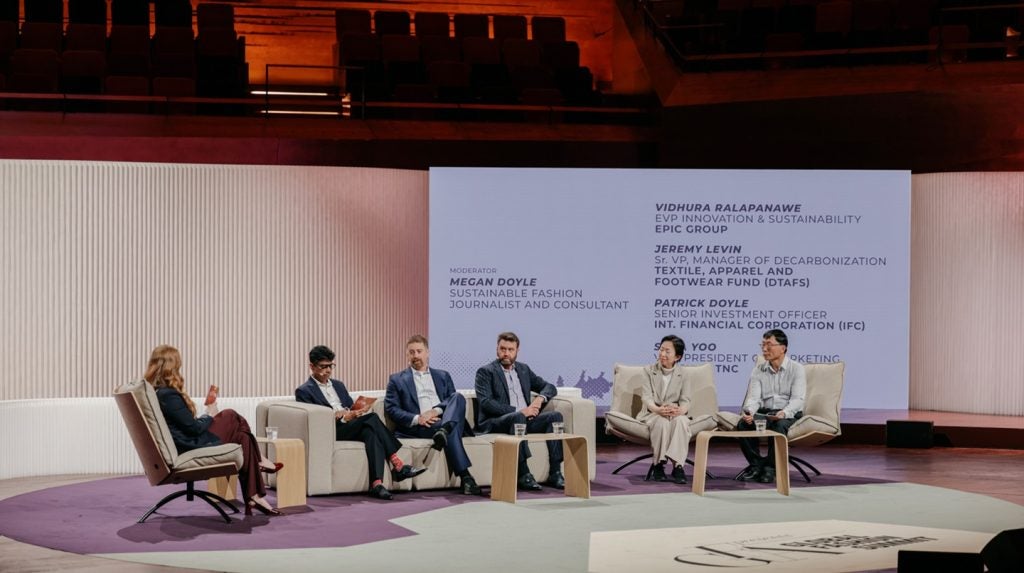
During the event, Hyosung TNC also took part in an on-stage panel, co-hosted by Global Fashion Agenda, and the Innovation Forum, where the company highlighted the potential for scaling bio-based materials.
The company highlighted the limitations of recycled spandex, noting that current variants remain largely fossil-based and are constrained by the volume of pre-consumer manufacturing waste available.
Speaking during the panel discussion ‘The Decarbonisation Pathway: Transitions and Turning Points,’ Hyosung TNC's marketing vice president Sora Yoo, said the company anticipated these constraints and had invested in a single, integrated bio-based supply chain to address them.
Yoo added that advancing bio-based spandex at a commercial scale depends on industry-wide infrastructure, trusted sourcing systems and partnerships to ensure brands can adopt alternatives without loss of product quality or supply chain resilience.
According to Yoo: “Scaling more sustainable alternatives will require not only industry collaboration, but also greater consumer awareness and demand to help shift purchasing priorities beyond cost alone.”
To illustrate its material transition efforts, Hyosung TNC also premiered its BBC StoryWorks Commercial Productions episode of Fashion Redressed II.
Hyosung TNC textiles marketing and sustainability director Simon Whitmarsh-Knight added: “What stood out at the Global Fashion Summit this year is the focus on driving action, and the role of collaboration across multiple industries and sectors.
“This has led me to have many meaningful conversations about how bio-based materials are moving from the margins to the mainstream. Large-scale commercial production is underway in Vietnam, and we can support the transition away from fossil-based stretch without asking fashion brands or consumers to compromise on performance.”