

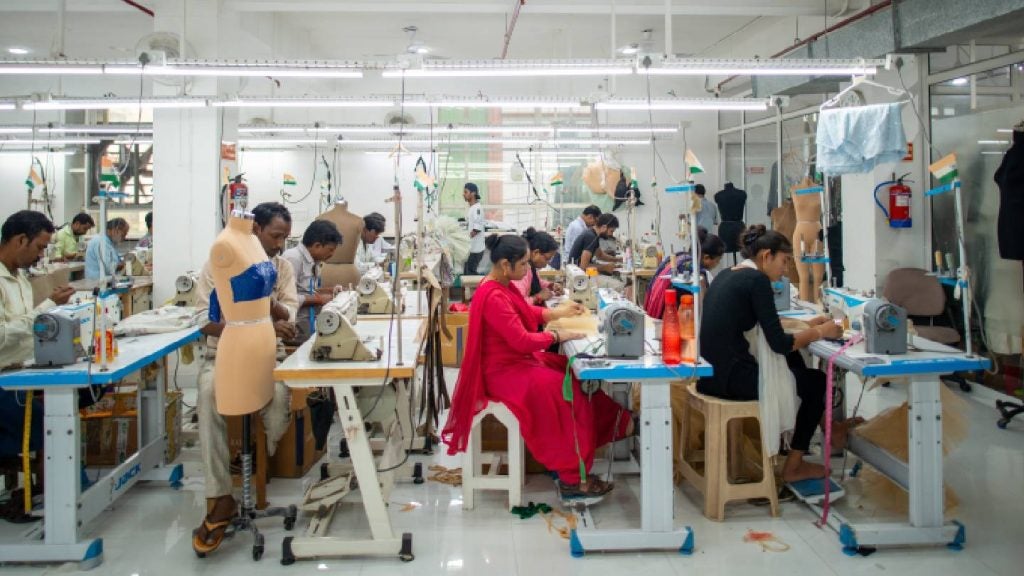
The study, titled “Breaking Point: Heat and the Garment Floor,” draws on multiple data sources. Researchers surveyed 115 workers in Tamil Nadu and Delhi-NCR (National Capital Region) and conducted 47 in-depth interviews.
The report also includes insights from a focus group discussion with sub-contracted home-based garment workers in Delhi-NCR. In addition, it presents case studies from 15 factories across Tamil Nadu, Delhi-NCR, and Gujarat.
According to the Ministry of Commerce & Industry, 2025, India’s textile and garment sector employs approximately 45 million people, making it one of the country’s largest employers.
However, the sector is particularly exposed to heat-related hazards due to dense factory settings and production demands driven by fast fashion timelines.
According to the report, 70% of garment workers are women, and they face multiple workplace risks including crowded workspaces, inadequate ventilation, poor lighting (Rana et al., 2021), and strict output targets.
The research found that extreme heat compounds these challenges and interacts with workplace pressure, abuse, and gendered dynamics.
Key findings from the report
The report shows that 36.5% of surveyed workers noted water on factory floors “often runs out or is not clean” and 80% said their workstations lacked air movement, with hot and stuffy conditions prevailing.
The health impacts reported are widespread. Nearly 69% stated that heat affected their ability to work, while 87.8% felt completely drained by the end of workdays during peak summer months.
In the past year, 87% reported experiencing symptoms such as headaches, dizziness, weakness, or muscle cramps related to high temperatures.
Work intensity further limits recovery, as 78% of respondents skip breaks to meet targets. Those who skip breaks report nearly double the stress levels compared to those who take breaks.
Specific health concerns affect women disproportionately, with almost all female respondents (96.8%) experiencing a burning sensation during urination. 92.6% reported menstrual irregularities or increased pain linked to production pressure.
The survey across factories also identified infrastructure gaps contributing to heat risk, with 60% reported lacking medical clinics or doctors onsite, and only six had clinics but some did not have a full-time doctor.
The report found that seven out of 15 factories did not record temperature or humidity levels. Among the factories that did, most rarely changed work schedules when temperatures were high.
Recommendations
The report calls for adoption of a broader definition of heatwaves using comprehensive temperature thresholds such as Wet Bulb Globe Temperature or Universal Thermal Climate Index (UTCI).
It also calls for recognising heat stress as an “occupational disease” and treating extreme heat as ‘force majeure’ in contracts, strengthening factory inspection processes, and shifting compliance responsibility onto suppliers.
Further proposals call for ensuring workers’ rights to remove themselves from unsafe environments during extreme heat without penalty and providing a Heat Hardship Allowance when temperatures exceed safe limits.
Recommendations also include extending unionisation rights, mandatory participation in risk assessment processes, establishing joint safety committees, mandating rest cycles as per ILO guidelines, and improving workplace amenities such as drinking water and hygienic washrooms.