
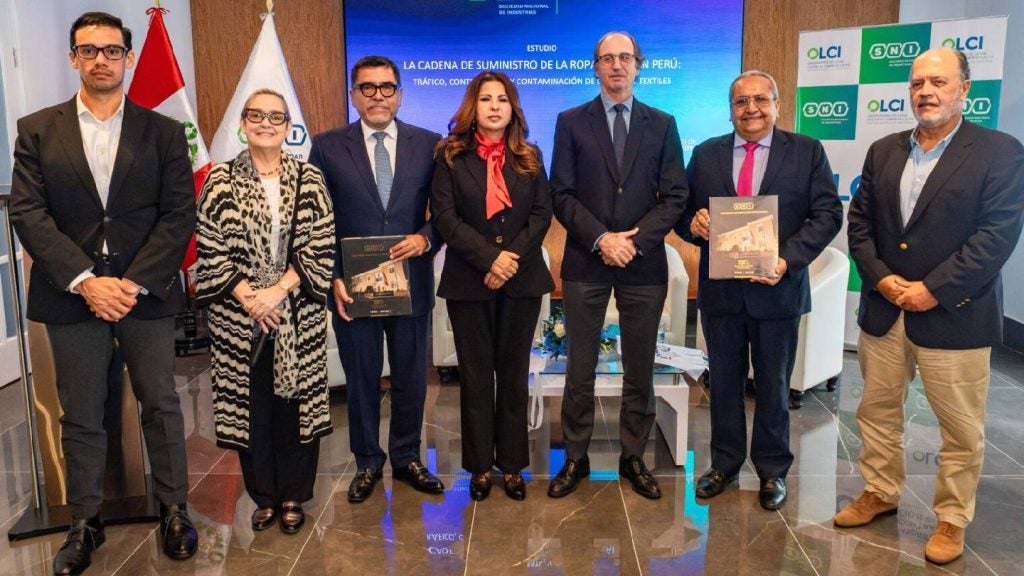
Prepared by the Institute of Criminology, “The supply chain of used clothing in Peru: Trafficking, smuggling and pollution of textile waste” study named Chile as the main entry point for used clothing into South America.
According to the Central Bank of Chile, the nation imported used clothing valued at $143.3m in 2023 and an annual average of 136,095 tons entering Chile between 2021 and 2023.
The study revealed that much of this clothing is then smuggled into Peru through its borders with Chile and Bolivia, using cargo trucks, interprovincial buses, private vehicles and others.
OLCI, which presented the study, noted that this trade forms part of an “international criminal chain” involving smuggling, document fraud, corruption, and environmental pollution.
These networks not only disrupt local textile and fashion industries but also worsen environmental degradation from unmanaged textile waste.
In addition, the investigation found that the illicit chain continues after the goods enter Peru. Used clothing is stored, sorted, and distributed by networks of wholesalers and retailers, who use digital platforms, social media, and courier services to reach buyers in various regions, making enforcement efforts more challenging.
SNI's Commission for Combating Illicit Trade president Ricardo Gutiérrez Rojas said: “The study demonstrates that we are not facing an isolated informal trade, but rather an international chain linked to illicit trade, document fraud, corruption, environmental pollution, and dynamics associated with organised crime.”
The investigation identifies a chain made up of 11 links, 32 activities, and 88 tasks, involving networks engaged in illicit trafficking, document fraud, corruption, and illegal sales, according to the Institute of Criminology, public affairs director Nicolás Zevallos.
He added that the study also points to 24 locations where used clothing is disposed of as waste, resulting in environmental impacts throughout the process.
“A key finding of our investigation is that in Peru there are no isolated routes for each type of crime. There isn't one route exclusively for used clothing, another for illegal gold, and another for drug trafficking. They all share corridors and logistics operators. The same transport that brings in used clothing across the southern border can also bring in illegal mercury, weapons, or be used for human trafficking or cocaine. Logistics operators diversify their criminal activities in a complementary way,” Zevallos said.
OLCI’s Recommendation
The OLCI’s principal recommendation is to equip Customs with state-of-the-art risk management systems backed by digital tools and data intelligence.
In addition, the Observatory advocates for law enforcement, the Public Prosecutor’s Office, and judiciary efforts to target large-scale criminal operations rather than focusing on informal market vendors.
The proposal also calls for local governments to monitor and close outlets selling prohibited used clothing in accordance with municipal regulations.
“The study leaves us with three clear conclusions: the fight against illicit trade and the protection of the environment are one and the same agenda; the supply chain crosses multiple countries and jurisdictions, therefore international cooperation must be a pillar to face this problem,” Gutiérrez Rojas added.