
The EU adopted new GSP+ rules in May 2026 that will require higher compliance on human rights, labour, environmental standards and governance from the start of 2027.
Under these revised requirements, Sri Lanka must meet obligations on disability rights, child protection during conflict, labour inspection, the Paris Agreement and organised crime, in addition to previously established criteria.
The EU has introduced a stricter “urgent withdrawal” mechanism for non-compliance and extended the review cycle from two to three years, meaning Sri Lanka would have fewer chances to address any compliance issues identified.
Current GSP+ trade preferences will be maintained until the end of 2028, but future access is not automatic.
According to JAAF, the EU requires Sri Lanka to formally reapply under the new regulations, submitting a comprehensive action plan in 2027 detailing specific, evidence-supported steps towards meeting the enhanced conditions.
During a recent GSP+ review, officials from Brussels made clear that “the action plan cannot be a paper exercise; this time, Sri Lanka will have to show credible, demonstrable action, supported by evidence of implementation”.
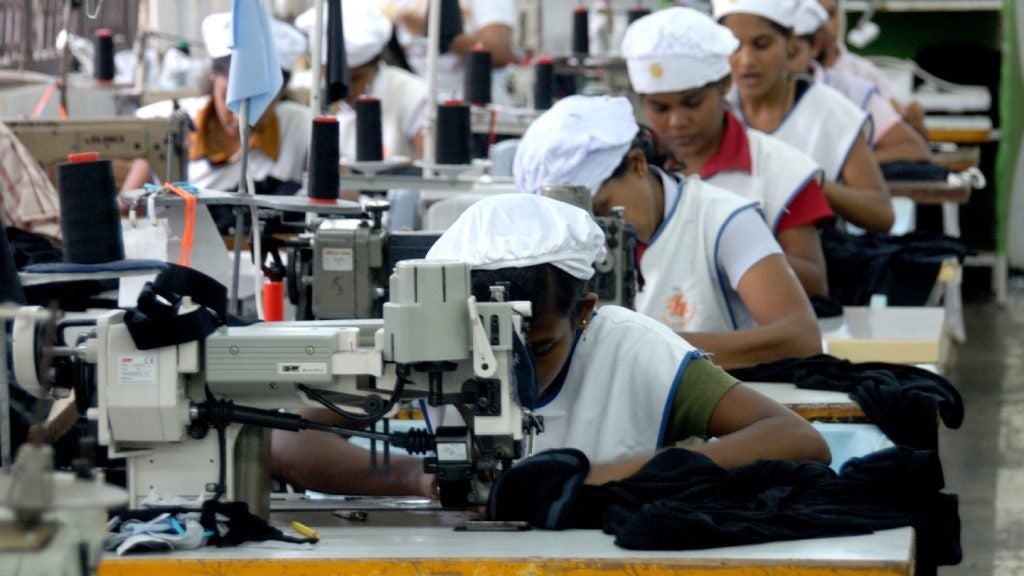
The apparel sector, which provides jobs for more than 350,000 people and accounts for 40-45% of the country’s total exports, is particularly reliant on GSP+.
JAAF claims the sector’s export earnings exceeded $5bn in December 2018, less than two years after the restoration of GSP+ status by the EU, underscoring the scheme’s importance to the industry’s performance.
One challenge highlighted by JAAF is the low take up of GSP+ benefits by Sri Lankan exporters, which has remained between 49% and 59%. This is largely due to the EU’s rules of origin, which stipulate that garments must be manufactured from domestically produced yarn.
Most Sri Lankan apparel makers rely on imported textiles that do not qualify under these conditions. JAAF claims that investments in local fabric production, agreements with regional partners and negotiations with the EU for more flexible rules could help increase utilisation.
The time frame for action is narrowing. Sri Lanka’s categorisation as an upper-middle-income country by the World Bank in July 2026 places it close to the GSP+ exit threshold. If this income level is maintained for three years, Sri Lanka risks losing access to the scheme.
JAAF suggests Sri Lanka begins early reapplication in 2027 to avoid any potential disruption to market access, noting that late application could see apparel exports face Most Favoured Nation tariffs as soon as 2029 if renewal is denied.
EU Ambassador Carmen Moreno recently told the Sri Lankan-German Business Forum that GSP+ “has delivered mixed results in Sri Lanka,” noting that manufacturing remains a smaller part of GDP compared to other export-driven economies.
Moreno encouraged Sri Lanka to pursue reforms and industrial investment, observing that the country has yet to realise the full potential of the preferences already available.
JAAF maintains that strengthening compliance and improving utilisation rates ahead of the 2027 application will be essential if Sri Lanka’s garment sector is to retain its access to the EU market under the revised GSP+ scheme.
Earlier this year, JAAF shared that Sri Lanka’s apparel exports dropped by 11.46% in February 2026, as key global markets experience increased strain, with the EU recording the steepest fall.