
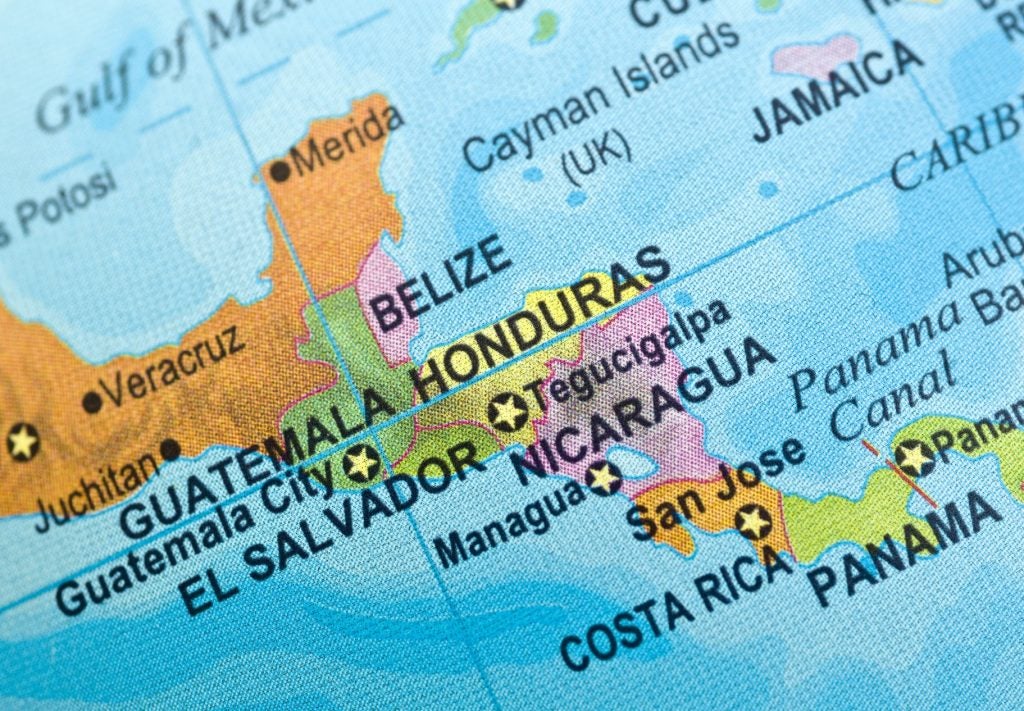
The Office of the US Trade Representative (USTR) has confirmed plans to introduce phased tariff increases on imports from Nicaragua from 2027, following a Section 301 investigation into labour rights, human rights and rule-of-law concerns.
Under the proposal, an additional tariff will apply to all Nicaraguan goods that do not qualify as originating under the Dominican Republic–Central America–US Free Trade Agreement (CAFTA-DR). The tariff will be set at zero from 1 January 2026, rising to 10% from 1 January 2027 and 15% from 1 January 2028.
The measures will stack on top of existing duties, including most-favoured-nation tariffs and the 18% “reciprocal” tariff imposed earlier under the International Emergency Economic Powers Act.
USTR says its decision to take more limited measures “balances the need for action and the importance of limiting disruption for US businesses,” including limiting “the impact on US exports to Nicaragua and US companies producing in Nicaragua.”
AAFA welcomes limits on CAFTA-DR goods
The American Apparel & Footwear Association (AAFA) welcomed USTR’s decision not to extend additional Section 301 tariffs to CAFTA-DR qualifying goods, warning that broader measures would risk destabilising deeply integrated regional supply chains.
“We support the USTR’s decision in choosing not to impose additional tariffs on CAFTA-DR qualifying goods as part of the section 301 investigation,” said AAFA president and CEO Steve Lamar.
“This approach allows the US to hold trading partners accountable to address unfair practices that harm US workers and businesses, while still safeguarding free trade agreements that are essential to our economy. CAFTA-DR directly supports tens of thousands of American jobs in our industry, with Nicaragua playing a major role in the production of textiles and apparel.”
In a previous joint submission to USTR alongside the National Retail Federation, Retail Industry Leaders Association and the United States Fashion Industry Association, AAFA highlighted the risks of sweeping trade action for apparel and textile supply chains.
The organisations said the CAFTA-DR yarn-forward rules have created “deeply interconnected and complex” supply chains involving US cotton farmers, mills and manufacturers across Central America, with Nicaragua a key production hub in the Western Hemisphere.
“In Nicaragua alone, we estimate that tens of thousands of jobs are directly connected to CAFTA-DR trade,” the groups said, urging USTR to avoid measures that could disrupt sourcing networks and lead to significant job losses.
While supporting efforts to address labour and human rights violations, the industry groups encouraged USTR to pursue a “targeted approach” directed at those responsible for abuses, while providing maximum lead time to allow companies to adjust sourcing strategies in a way that minimises disruption across the region.