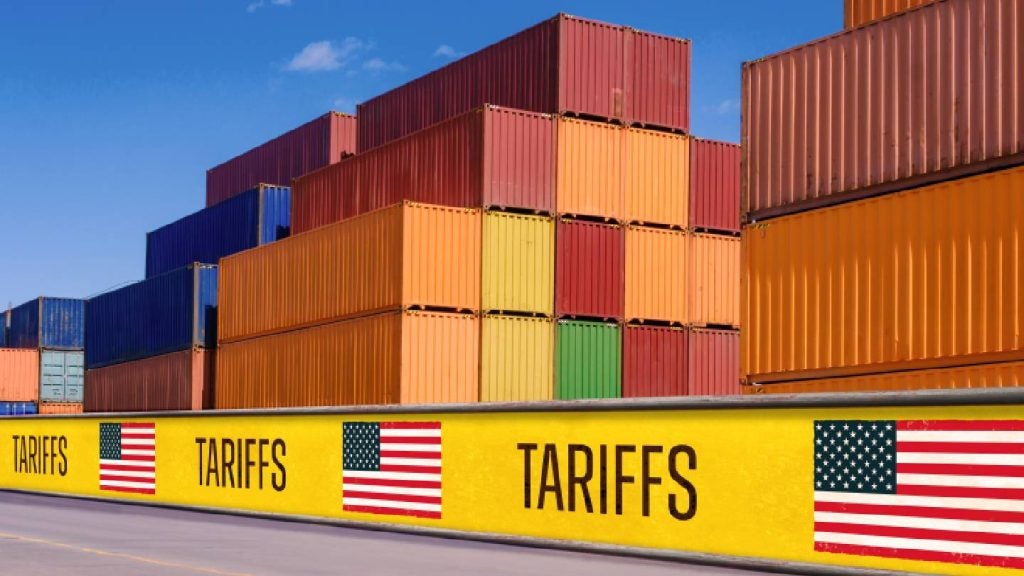
The action, directed by President Donald Trump and carried out today by Ambassador Jamieson Greer, invokes Section 301 of the Trade Act of 1974, USTR confirmed.
The new measures come as a previous 10% global tariff under Section 122 of the Trade Act expires on 24 July.
According to a USTR Fact Sheet, the tariffs target the country's top 60 trading partners, accounting for 99.4% of all US imports, yet exempt certain products such as oil, gas, fertiliser, and selected foods.
The agency said that 54 economies including the UK, Australia, Brazil, China, India, Japan, and the European Union, have not established or effectively enforced bans on imported goods made with forced labour.
An additional six economies, including Canada, Ecuador, the European Union, Indonesia, Mexico, and Pakistan, have been cited for failing to enforce such bans.
Countries that have committed to adopting and enforcing these prohibitions face a 10% tariff, while those that have not will see tariffs set at 12.5%.
Ambassador Greer said: “President Trump recognises that decades of moral suasion have not eradicated forced labour from global supply chains. The US has had a forced labour import ban for nearly a century, and rigorously enforces it; it’s well past time for our trading partners to do the same.
“Today’s action will begin to correct what is both a human rights abuse and distortive trade practice to improve the welfare of workers everywhere. I am encouraged by the trading partners who have moved quickly to adopt forced labour import prohibitions, and look forward to ensuring their effective enforcement.”
The US government’s move follows an extensive period of public consultation, with USTR citing more than 2,100 public comments and two rounds of public hearings as part of its investigative process.
However, the introduction of these tariffs has drawn swift criticism from several US trade partners.
Australia and Brazil both described the measures as unjustified and stated intentions to seek their removal.
Norway also contested the move, saying there was “no basis” for the new tariffs.
Canadian Prime Minister Mark Carney vowed to defend domestic industries after the US enacted a 50% tariff on a range of Canadian goods, including apparel and textiles. Carney said Canada would “take any measures necessary” to protect its economy and workers.
Meanwhile, the Sri Lankan apparel trade body, JAAF, said it was pleased to be in the list of countries with the 10% tariffs instead of 12.5%.
"Parity of tariffs is something JAAF has consistently and actively lobbied for, and we are extremely appreciative of the efforts of His Excellency President Anura Kumara Dissanayake and the Government of Sri Lanka in ensuring that strong representations were made to the US authorities to secure this outcome.
"Sri Lanka's apparel industry competes in a crowded field, and even a 2.5 percentage point difference in tariff treatment can be the difference between winning and losing an order to a rival sourcing destination. Securing parity with Bangladesh, Pakistan, India, and Cambodia protects the competitiveness of an industry that remains the country's largest export earner and a major source of employment, particularly for women, across the country.
"JAAF recognises that this result did not happen by chance. It reflects sustained, coordinated engagement between industry and government at every level, from the submissions made to USTR to the direct representations carried out in Washington. We view this as a strong example of what can be achieved when the private sector and government work in close partnership on issues that directly affect Sri Lanka's export competitiveness."