
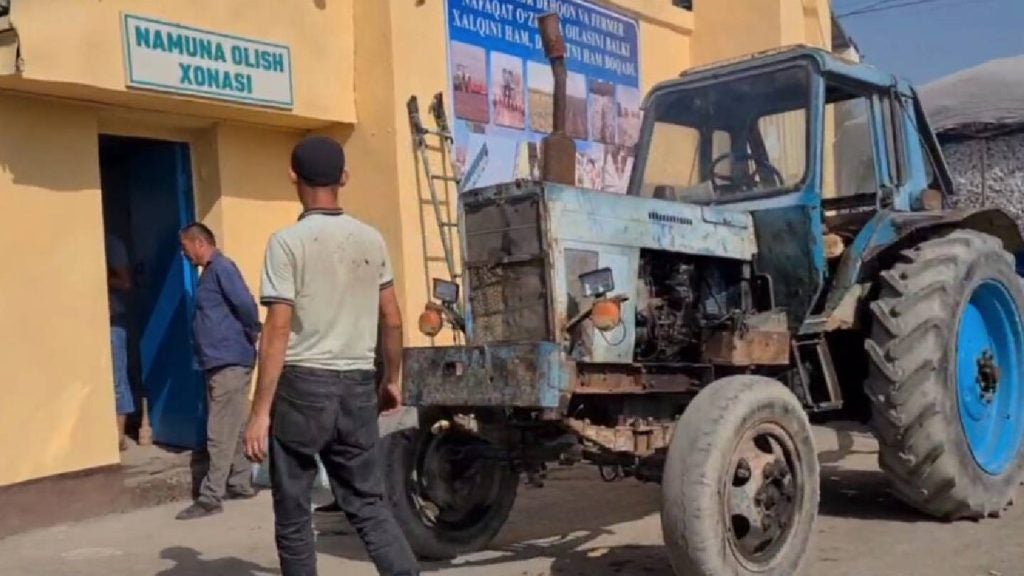
The non-governmental organisations (NGOs) allege that authorities enforce mandatory crop quotas, use threats, and impose penalties, including land seizure, on those failing to meet targets.
Released on 17 February 2026, the report, “Farmers Have No Freedom: Abuse and Exploitation of Cotton and Wheat Farmers in Uzbekistan,” describes circumstances in which farmers must sell crops at centralised prices set by the state.
Fieldwork involved interviews with 75 farmers and experts across five Uzbek regions between October 2023 and December 2025, alongside reviews of court documents, legislation, media articles, social media posts, and official statements.
As per the report, local officials have allegedly used violence against farmers during quota enforcement meetings. Some described being slapped or beaten or having objects thrown at them.
Farmers also stated that officials called them “donkeys,” “scumbags,” or “pigs” if they failed to deliver their quotas.
Uzbek Forum for Human Rights director Umida Niyazova said: “The Uzbekistan government needs to end the coercive and exploitative conditions in which hard-working farmers are expected to produce cotton and wheat.
“Authorities should commit to agricultural reforms that offer real protections for these farmers and heed the advice of farmers themselves as to what changes are actually needed.”
It is claimed that private cotton-textile and wheat production companies frequently delay payments or do not pay the full amount owed. In certain cases, this has led to tax fines or bankruptcy for some farmers. Although courts have sometimes ruled in favour of the farmers, authorities have not consistently enforced orders requiring companies to pay.
Farmers said land lease agreements offered no defence against arbitrary seizure by local authorities if quotas were unmet. Lawsuits challenging land loss rarely succeed. On the few occasions where courts rule for the farmer, local authorities often fail to implement the decision.
“The judge does what the governor says,” stated a dispossessed farmer, adding that “The court cannot help in the matter of land.”
Some police actions have allegedly included detaining farmers who missed quotas for several days without charge and targeting local bloggers reporting on these issues, with the courts issuing short-term custodial sentences following arrests.
The government has acknowledged ending forced labour of cotton pickers in recent years and pointed to ongoing reforms under strategies like the 2020-2030 Agriculture Development Strategy, citing new laws meant to safeguard rights in agriculture. It largely rejected the findings presented by Human Rights Watch and Uzbek Forum.
Despite legislative changes, both groups argue that the system still prevents independent operation by farmers, making them subordinate to state interests.
One cotton farmer from Khorezm said: “It is as if we have become hired workers for someone, not landowners.”
Calls for change
Uzbekistan ratified key international agreements guaranteeing labour rights in 1995 and joined International Labour Convention 87 in December 2016.
Human Rights Watch and Uzbek Forum call on Uzbek authorities to ensure compliance with these commitments, remedy abusive conditions, including abolishing quotas, and consult directly with farmers regarding future reforms.
The groups urged international partners to press Uzbekistan for an end to coercive practices within agriculture. The European Union has been asked specifically to insist upon human rights compliance as a condition of new bilateral agreements signed in 2025.
Human Rights Watch Central Asia adviser Mihra Rittmann said: “It’s appalling that Uzbekistan’s cotton and wheat farmers work in such exploitative and coercive production conditions.
“Uzbekistan’s partners, international financial institutions, and potential investors in Uzbekistan’s agricultural sector should use their leverage to ensure that the Uzbek government implements reform that genuinely protects farmers and their rights.”