

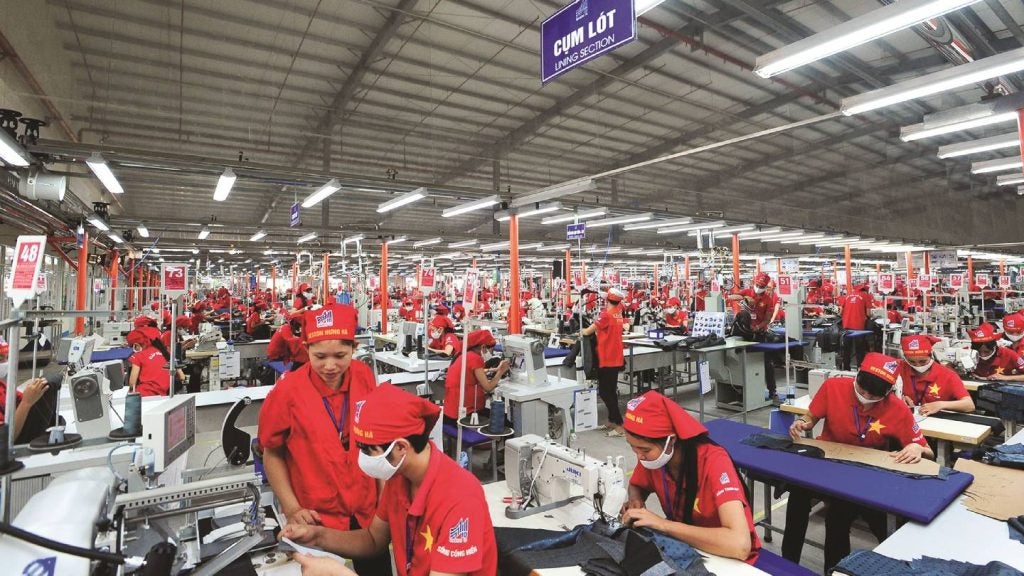
VITAS chairman Vu Duc Giang attributed this performance to what he described as “flexible strategies, business acumen, and strong advancements in green transformation and comprehensive digitalisation.”
The growth comes against a backdrop of continued volatility in global demand and shifting market dynamics affecting the international fashion industry.
According to VITAS, Vietnam's response has involved a focus on comprehensive diversification efforts, expanding markets, client bases and product lines.
Vietnamese textile and garment exports now reach 137 countries and territories, Giang noted, with the US remaining the largest single market, accounting for roughly 40% of exports. Other significant destinations include the European Union, South Korea, Japan, China, as well as emerging markets in Africa and the Middle East.
The sector has also prioritised the adoption of new technologies, increasing the integration of automation, robotics, and AI within both management and production processes. This technological push is aimed at improving productivity and enhancing operational efficiency across the supply chain.
Industry leaders further highlighted a drive to strengthen sustainable linkages between enterprises, fostering closer cooperation throughout the industry.
Under this approach, firms are encouraged to share resources and knowledge, and to work collectively to meet evolving export demands.
Flexibility has proved crucial, VITAS said, as Vietnamese businesses have adjusted to new requirements from international buyers, accepting smaller, more frequent orders, tighter delivery deadlines, and more varied payment terms, including deferred payment arrangements extending 30 to 60 days in some cases.
With continued growth momentum, VITAS stated that the industry is “confidently” pursuing its 2026 full-year export target of $47–47.5bn.
Many firms have reportedly secured production orders through the end of the year and are engaging in negotiations for contracts covering the first quarter of 2027.
However, the association warned that tightening regulations and new standards from major importing countries would likely pose challenges in the coming period.
From 2026 to 2030, and looking ahead to 2035, industry leaders have identified digital and green transformation as “survival criteria.”
Vietnamese manufacturers, according to VITAS, are dedicating 65–68% of relevant investments to infrastructure upgrades, focusing particularly on automation and AI applications.
The sector is also committing to the government’s net-zero goals for 2050, which will require further spending on renewable energy sources like rooftop solar installations, advanced wastewater treatment, and the adoption of environmentally friendly materials.
Industry representatives called for local jurisdictions to support development of specialised industrial zones featuring centralised wastewater treatment to attract new investment in weaving and dyeing operations.
Addressing this infrastructure need would help alleviate persistent shortages of domestic raw materials.
Discussing competitive positioning, Giang argued that Vietnam’s focus on mid- to high-end product segments and rapid delivery distinguishes it from other major textile exporters such as Bangladesh and India.
He also pointed to the country’s stable business environment, the skilled manufacturing workforce, and Vietnam’s engagement in 17 new-generation free trade agreements, factors seen as supporting the sector’s global competitiveness.