

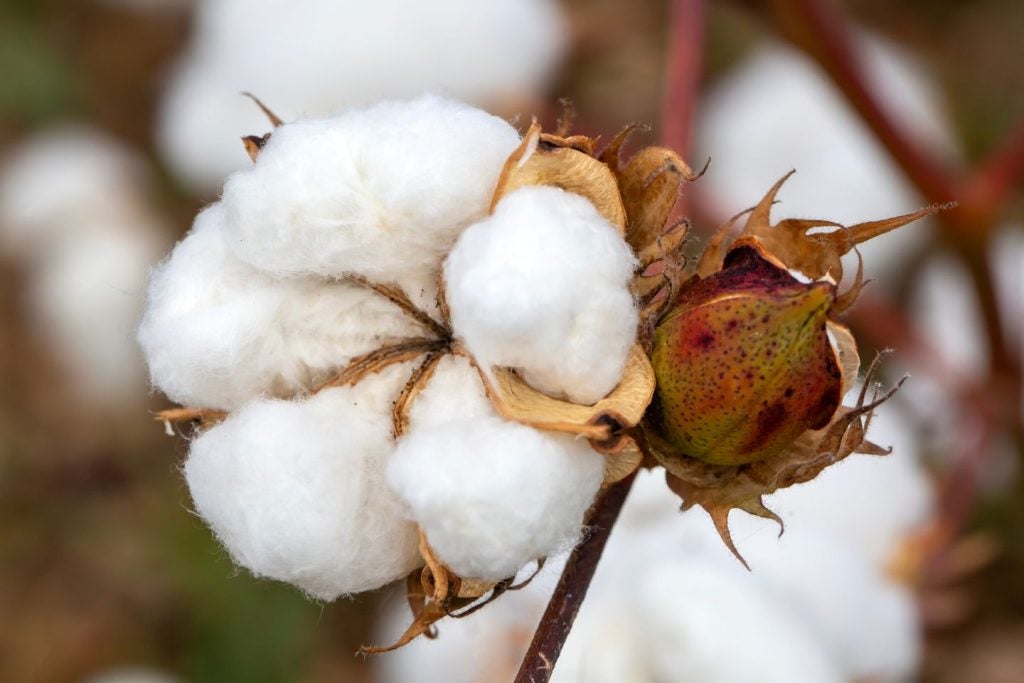
The USDA’s just-announced Great American Cotton Plan reads at first like a routine farm support announcement. The familiar pieces are there: crop insurance, government loans and the usual Washington language about a vital agricultural sector. USDA has producers on track for a fifth straight losing year, with projected losses near $2.6bn across 9m planted acres. Five years of that is structural.
But the real story sits past the farm gate. Washington has started treating cotton as more than a commodity waiting on a better price. The plan repositions it as a strategic fibre, wired into trade policy and sourcing, and pulls it into the larger fight over which fibres run tomorrow’s supply chains.
Cotton has been losing ground to synthetics for decades. Polyester won on cost. It was cheap and easy to run at volume, so mills pushed tonnage and brands held price points. Most buyers never saw the fibre story; price closed the argument. Cotton kept its emotional pull and lost share wherever cost dictated the order.
Now USDA is stepping in with “Plant Not Plastic.” The line is blunt and probably too neat, but it works. It hands cotton a consumer argument that puts comfort, biodegradability and microplastics into the same sentence as fibre choice. A slogan moves nothing by itself. Put tariff benefits, mill payments and traceability rules behind it, though, and it starts to shape what buyers specify.
Farm Policy Starts Looking Like Industrial Policy
The plan has four goals: lift consumption, grow production, improve trade and shield growers. On its face, that is a standard farm package, but it pushes US cotton deeper into the textile chain. Higher marketing loan rates for upland and extra-long staple cotton help grower liquidity, and better insurance and firmer reference prices take risk out of the planting decision. The cotton jassid research is overdue. Growers plant when the numbers have a chance of working, and not before.
The pieces that matter more sit downstream. USDA is moving cotton processors and manufacturers up the queue under Rural Development’s Business and Industry Guaranteed Loan Program. The Economic Adjustment Assistance for Textile Mills rate goes from 3 cents to 5 cents a pound processed. The Pima Agriculture Cotton Trust Fund is reauthorised through 2031, and the administration is backing the Buying American Cotton Act, which would reward products made with US cotton. Together, those measures are industrial policy more than emergency relief.
Demand has to be rebuilt, which means brands and sourcing offices need a reason to specify US cotton even when the garment is sewn overseas. The plan talks up restoring domestic textile manufacturing, and some of that is real: spinning capacity, technical textiles, targeted apparel. But mass-market apparel is not coming home at scale. The labour and cost math rule that out.
The Real Play May Be Offshore
The bigger opening is offshore. US cotton can be driven into foreign apparel chains through trade incentives and origin rules. That is more doable than reshoring, even if it makes a weaker headline. The clearest signal is Indonesia and Bangladesh. Indonesia has agreed to import at least 163,000 metric tons of US cotton a year for five years, then hold above 150,000 tons. Bangladesh is being offered tariff advantages on apparel made with US cotton.
With Bangladesh, fibre policy becomes apparel policy. It is the world’s second-largest apparel exporter, and tying lower US tariff rates to US cotton would move sourcing. Mills import more US fibre, spinners keep tighter paperwork, exporters prove cotton origin from bale to garment. Indonesia’s commitment gives US cotton a firmer demand floor, and it gives Indonesian mills a real reason to line up with US cotton if it gives them better access to the American market.
Other origins should read the fine print. Brazil, Australia, India, Pakistan and the West Africans compete on price, quality and reliability. Now they may also face trade structures that favour US cotton inside apparel shipped back to the States. Mills are not sentimental. They run basis, shipment timing and price, and buy whatever pencils out. But if the tariff edge is real, sourcing teams notice, and origin starts to matter to where the order lands.
Cotton Has a Strong Case Against Synthetics, But It Has to Be Careful
USDA’s swing at synthetics matters too, and cotton has to watch itself here. It can fairly note that polyester, nylon and acrylic come out of a barrel of oil, and the microplastics worry is real. But it cannot get smug. The minute it claims the moral high ground, the counterfire comes back: water use, pesticides, land use, forced labour risk. Some of that is dated, some overblown, some fair, and cotton still has to answer all of it.
Cotton’s case cannot ride on the word “natural.” Carry a premium and soft sustainability language and cotton loses to polyester on the mass-retail rack. Give it verified origin, a competitive price and real comfort and it has a chance. The openings are obvious: basics, denim, towels, bedding, medical textiles, anywhere comfort decides the purchase. Nobody wants a sermon in the underwear aisle. The fibre wins on performance, price and proof, or it does not win.
Price Still Runs the Room
Cotton’s problem was never just messaging. It is price volatility and soft demand. USDA’s own outlook points to tighter world stocks in 2026/27, with mill use running ahead of production. Growers will welcome firmer prices. Apparel buyers will not. Let prices run up too fast and mills blend away from cotton, as they always have. Polyester is the escape hatch in price-sensitive categories, so a revival needs stronger demand and a price that fits retail.
The plan props up farmers while making US cotton more attractive downstream. Loans, mill payments, tax credits and origin incentives all push one way: keep the grower solvent and the fibre moving without pricing cotton out of the market. That only works if mills, exporters and brands can use the incentives without drowning in paperwork or losing on price.
The Global Cotton Industry Should Read the Fine Print
The plan is part of a wider move toward managed trade, origin-based incentives and politically preferred supply chains. Like it or not, that shift is already underway. Raw fibre is becoming a policy market, and mills carry more origin paperwork. For apparel exporters, the cotton they pick may decide their tariff treatment, and for brands, fibre choice now sits inside sourcing, compliance and consumer messaging.
The plan could help US cotton win back export ground after Brazil passed the United States as the top exporter. It could sharpen the case against synthetics and tie US fibre more directly to apparel coming out of Bangladesh and Indonesia. It could also turn into one more feel-good campaign that dies on weak execution. Growers need demand, mills need margin, and everyone downstream needs rules they can actually use.
USDA has put down a serious marker. Cotton is being repositioned as an agricultural, industrial and trade asset. The plan reads as grower support, but it reaches into mills, brands, tariffs and the cotton-versus-polyester fight. For years, cotton has been explaining why it deserves to survive. This is the first time in a while it has been handed a way to compete.
Bob Antoshak is Vice President, Global Strategic Sourcing & Development, at Grey Matter Concepts, a New York-based men’s apparel company. He has an extensive background in marketing, mergers and acquisitions, sourcing, sustainable business, information services, trade policy and strategic planning